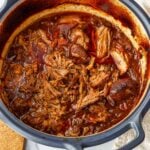
Dutch Oven Pulled Pork
This Dutch oven pulled pork is slowly braised in the oven in a rich braising liquid made with BBQ sauce, beer, aromatics, and a smoky rub until it's fall-apart tender.
Servings: 7 people
Calories: 638kcal
Equipment
- 7-quart Dutch oven or 8-quart
Ingredients
- 6 pounds boneless pork shoulder excess fat trimmed, cut into medium-sized portions
- Vegetable oil for searing
- 1 large onion sliced
- 5 garlic cloves pressed
- 1 cup light beer
- 2 tablespoon apple cider vinegar
- 1 tablespoon Dijon mustard
- 1 cup your favorite BBQ sauce
- 3 tablespoons brown sugar
- Salt and pepper to taste
Dry rub for pork:
- 1 tablespoon smoked paprika
- 2 teaspoons chili powder
- 1 tablespoon garlic powder
- 2 teaspoons onion flakes
- 1 teaspoon ground mustard
- 1 tablespoon Kosher salt
- 1 teaspoon ground black pepper
Instructions
- Preheat oven to 300ºF.
- Season pork with dry rub: In a bowl, mix the ingredients for the dry rub for the pork. Rub the pork shoulder pieces evenly with the dry rub, pressing to adhere.
- Sear: Heat a few drizzles of oil in a large Dutch oven over medium heat. In batches, sear the seasoned pork until golden on two sides. Remove from the Dutch oven and set aside. Tip: Don’t use high heat because the spices can burn.
- Saute aromatics: In the same pot, heat more oil and saute the sliced onions until softened for about 5 minutes, deglazing with the moisture from the onions. (or if needed, add a splash of beer or water to release any burning spots). Then, stir in the garlic for another 1-2 minutes until fragrant.
- Deglaze and add braising liquid: Add beer, scraping to release the brown bits. Let it simmer over medium-low heat for about 2 minutes until somewhat reduced. Then, add apple cider vinegar, dijon mustard, BBQ sauce (1 cup), and brown sugar. Combine and bring back to a simmer.
- Braise in the oven: Return the seared pork, making sure it’s about 3/4 of the way submerged in the liquid. If you're short, top it off with a little more beer (or broth). Bring back to a simmer and cover. Transfer to the oven and let it braised for 3 or 3.5 hours at 300ºF.
- Shred and serve: It's ready when it's tender, it should fall apart easily (if not return to the oven for another 20-30 minutes). Before shredding, let it rest for 10-15 minutes. Serve over sliders, sandwiches, or any way you'd like with more BBQ sauce.
Video
Notes
- Use pork shoulder with good marbling, but not too fatty either. Avoid lean cuts like pork loin or tenderloin, as they will turn out dry and tough.
- Why cut up the pork: This increases the surface area for the dry rub and ensures the meat cooks evenly, so it gets to that fall-apart tenderness quicker.
- Searing: Use medium heat to avoid burning the delicate spices, and do it in batches so it sears instead of steaming.
- Which type of beer to use: A light beer that’s not so bitter. I use Modelo.
- Liquid level: The braising liquid should only come ¾ of the way up the pork. Submerging the meat completely will boil it instead of braising it.
- When is oven pulled pork ready? After about 3-3.5 hours, or when the center reaches an internal temperature of 195°F-205°F. If it's still tough, return to the oven for another 20-30 minutes.
- Make ahead: You can fully cook and shred the pork up to 2 days in advance. Store it covered in its own cooking juices in the fridge to keep it from drying out.
- Storage: Leftovers will keep in the fridge for 3–4 days.
- Freezing: Let cool completely. Freeze in smaller freezer bags or in Souper Cubes for up to 3 months.
- Reheating: Warm the pork in a covered skillet over medium-low heat with a splash of broth, microwave it, or wrap it tightly in foil and heat in a 300°F oven.
- No Dutch oven? Use a stovetop pot to sear and deglaze, then transfer everything to a large baking dish. Cover tightly with several layers of foil and cook in the oven as directed.
- Slow cooker version: Season and sear first. Transfer everything to a slow cooker and cook on LOW for 8 hours, or on HIGH for 4.5–5 hours.
- No beer? Swap the light lager with chicken stock or broth.
- If you can't find boneless, you can either cut the meat off the bone beforehand, or leave the bone in during cooking to add extra flavor and moisture.
- Dry rub variations: Customize the dry rub by adding cayenne and cumin for extra heat, or swap it entirely for a chicken taco seasoning.
Disclaimer: Nutritional values (per serving) are approximates only.
Nutrition
Calories: 638kcal | Carbohydrates: 28g | Protein: 89g | Fat: 16g | Saturated Fat: 5g | Polyunsaturated Fat: 3g | Monounsaturated Fat: 6g | Trans Fat: 0.1g | Cholesterol: 233mg | Sodium: 1666mg | Potassium: 1693mg | Fiber: 2g | Sugar: 20g | Vitamin A: 757IU | Vitamin C: 3mg | Calcium: 67mg | Iron: 4mg