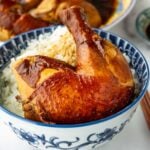
Soy Sauce Chicken
This authentic Cantonese Soy Sauce Chicken ("See Yao Gai") is gently poached in an aromatic soy broth until tender and glistening. A simple, restaurant-quality family recipe you can make at home!
Servings: 6 people
Calories: 420kcal
Equipment
Ingredients
For the chicken
- 3 to 3.5 pounds whole chicken small chicken
- 4 to 5 cups water to blanch the chicken skin
Soy braising liquid
- 2 tablespoons vegetable oil
- 2 medium shallots peeled and cut into chunks
- 6 slices fresh ginger peeled
- 5 scallions cut into chunks, both white and green parts
- 8 cloves fresh garlic peeled and smashed
- 1 ½ cups light soy sauce
- 3 tablespoons dark soy sauce
- ⅓ cup Shaoxing wine or dry sherry
- 4 cups water plus more as needed for the braising liquid
- 2 pods star anise
- ½ (heaping) cup rock sugar or brown sugar
Instructions
- Blanch the chicken skin: Pat dry the chicken thoroughly and place it in a large heat-proof bowl. Boil water (about 4-5 cups). Once boiled and hot, pour it over the chicken. Set aside. Note: Pouring boiling water over chicken, a common Chinese technique, tightens the skin and renders surface fat, which allows the skin to absorb color from the soy sauce better.
- Saute aromatics: In a large 6 or 7-quart pot (large enough to submerge the chicken), heat vegetable oil over medium-high heat. Sauté shallots, ginger, scallions and garlic until fragrant and slightly charred, about 3 minutes.
- Deglaze: Add the shaoxing cooking wine (or dry sherry) and deglaze the browned bits. Simmer until halfway reduced, about 2 minutes.
- Add soy sauce mixture and water: Add the light soy sauce, dark soy sauce, water (4 cups), anise star pods, and rock sugar. Mix and bring to a simmer.
- Poach chicken: Carefully add the chicken in, breast side down first. Make sure it’s almost fully submerged, if not add another 1 cup of water or as needed (I ended up using ~5 cups of water total). Bring back to a low boil, then flip the chicken breast side up. Cover and simmer for 30 minutes, flipping and basting with a ladle every 8-10 minutes for even color on all sides.
- Let it sit with the heat off: Once the chicken is almost done, turn off the heat and let it sit inside (breast side up) for another 15-20 minutes, covered. This will gently finish cooking the chicken so it's tender. It’s ready when the center of the breast reaches 165ºF (and 180ºF in the thighs). At the end, baste it a few more times for additional color. NOTE: The total cooking time will depend on how heavy the chicken is, so always use a thermometer to be sure. Cook for about 12-15 minutes per pound.
- Carve and serve: Transfer to a carving board and let it rest for 10 minutes. Then carve and serve. Note: A Chinese cleaver works best for cutting through the bone, but you can also carve or shred the meat if preferred.
- Optional: This dish is traditionally served with a drizzle of the soy braise, which is thin. However, you can thicken it with a cornstarch slurry (about 3 tablespoons diluted in water).
Video
Notes
- Use a small whole chicken (approx. 3 to 3.5 lbs). This ensures even heat distribution and better skin color without the meat becoming overcooked.
- Why blanch the skin. This tightens the skin and removes surface fats, which helps the color to absorb better.
- Maintain a low boil. Avoid a fast aggressive boil, as high heat toughens the protein and tears the skin.
- Use a deep pot, about 6-quart, that allows the chicken to be mostly submerged in the liquid for even cooking and color.
- The type of pot you use can matter. For example, clay pots (commonly used in Chinese cuisine) retain heat better than cast iron or ceramic. So if using clay, adjust the cooking time or use a thermometer. For testing this recipe, I used a ceramic pot (a reader pointed this out, thank you!).
- How to prevent the skin from tearing. Turn or baste the bird every 10 minutes so the skin doesn’t stick to the bottom or sides of the pot. Insert the tongs inside the cavity on the back to avoid tearing the front breast skin.
- Sauce consistency: The final sauce is traditionally thin and drizzled over the chicken, but feel free to add a cornstarch slurry to chicken it (about 3 tablespoons).
- Make ahead: This dish can be made ahead 1 day ahead since it is sometimes traditionally served at room temperature or chilled. Do not marinate the chicken raw; it must be poached directly.
- Freezing: Freeze for up to 2 months. Thaw in the fridge before reheating.
- Bone-in chicken thighs or drumsticks can be used for a shorter cooking time (approximately 20–25 minutes).
- Sugar: Brown sugar is the preferred substitute for rock sugar.
- Onions: Red or white onions can be used instead of shallots.
- Shaoxing wine: Substitute with dry sherry.
Disclaimer: Nutritional values (per serving) are approximates only.
Nutrition
Calories: 420kcal | Carbohydrates: 26g | Protein: 28g | Fat: 21g | Saturated Fat: 5g | Polyunsaturated Fat: 6g | Monounsaturated Fat: 8g | Trans Fat: 0.1g | Cholesterol: 82mg | Sodium: 3842mg | Potassium: 460mg | Fiber: 1g | Sugar: 20g | Vitamin A: 254IU | Vitamin C: 6mg | Calcium: 70mg | Iron: 3mg