

This beautiful Apple Cider Brined Pork Loin recipe is your guide to the perfect feast! We’re using an apple cider brine, which tenderizes the pork while infusing it with subtle sweet and tangy flavor throughout.
With a little time set aside for overnight brining, you’ll be on your way to a cozy dinner that will impress everyone!
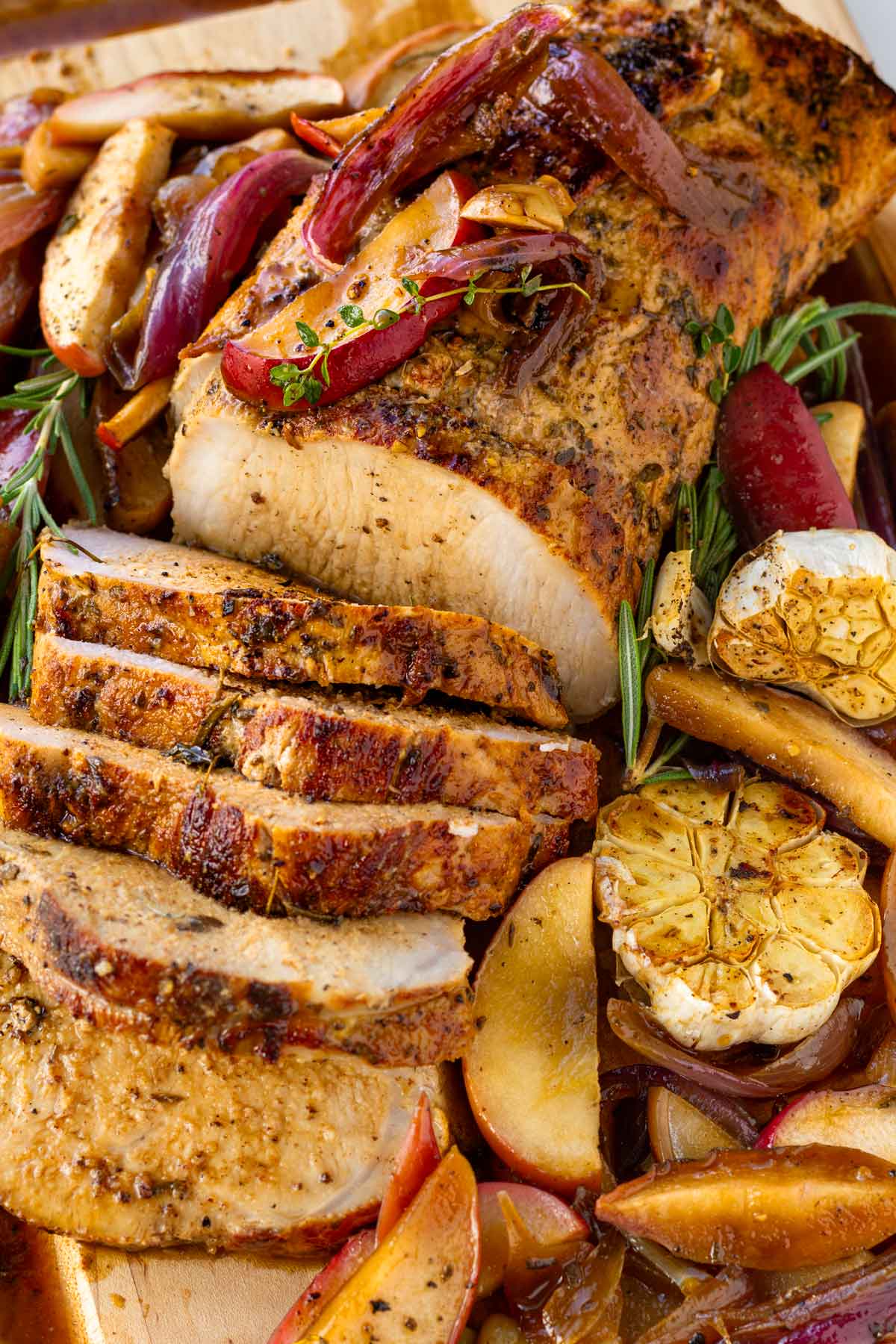
I love cooking pork with apple cider, especially this time of year. I always make my Apple Cider Pork Shoulder Roast and Pork Chops with Apples. An you know, apple cider isn’t just great for sauces and braises when it comes to pork recipes, it also makes an excellent brine!
Pork loin is a lean cut, so brining is key. In my apple cider brined pork loin roast recipe, the apple cider ensures it’s always juicy and tender, with subtle notes of warmth, sweet and tangy. If you like a more naturally tender cut, try my Stuffed Pork Tenderloin!
We soak the pork loin in the apple cider brine overnight, then sear it in a cast iron skillet before roasting it surrounded by apples and onions. The final touch is the maple cider glaze that gets brushed all over the apple cider pork loin as it roasts!
Jump to:
Why I Love This Recipe
- Great for holidays and fall. If you don’t feel like cooking up a big turkey, this apple cider brined pork loin is a fantastic alternative for the holidays!
- Always juicy, tender, and flavorful. Brining pork loin in the apple cider keeps the meat moist but also penetrates incredible flavor.
- Perfect golden crust. Searing the apple cider pork loin before roasting locks in flavor and moisture.
- Customize it! Use your favorite vegetables, or clear out your fridge and use what you’ve got. Carrots, parsnips or Brussels sprouts are great options.
The Apple Cider Brine for Pork
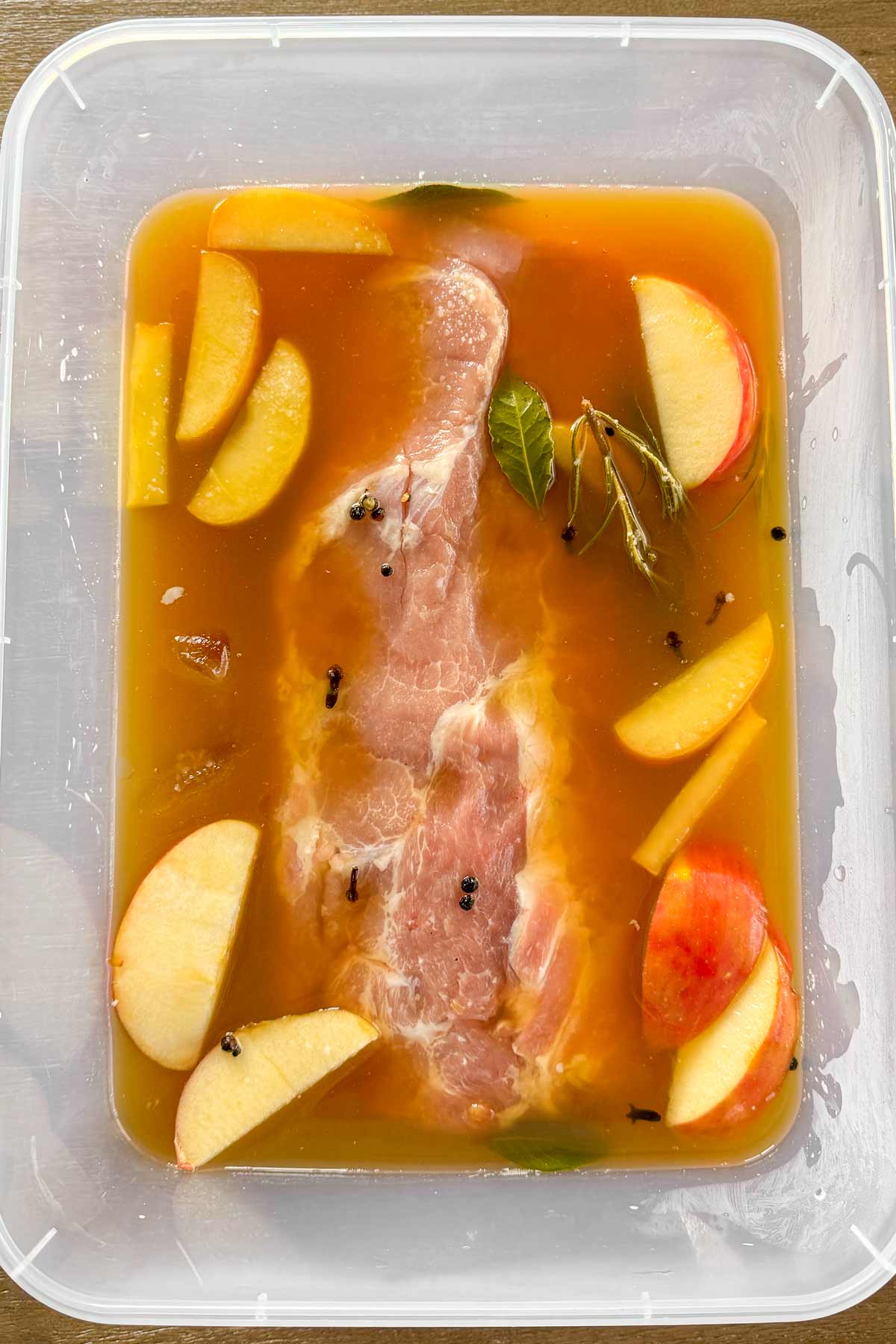
Let’s talk about the apple cider brine for our pork loin! Brining transforms this naturally lean cut into something juicy and flavorful by introducing moisture, while allowing the salt and apple cider to season it all the way through. The cider’s acidity helps tenderize the pork, so it’s tender.
For this apple cider brined pork loin recipe, plan ahead to brine for 16–18 hours, but no more than 20 hours, or the pork can become overly salty. You can customize the brine with herbs, spices or aromatics. In this recipe, brining is essential, but if you’re short on time, I also have an apple cider pulled pork that skips this step.
Ingredient Notes
Here I have included a few notes from recipe testing that I hope you find helpful when grabbing your ingredients.
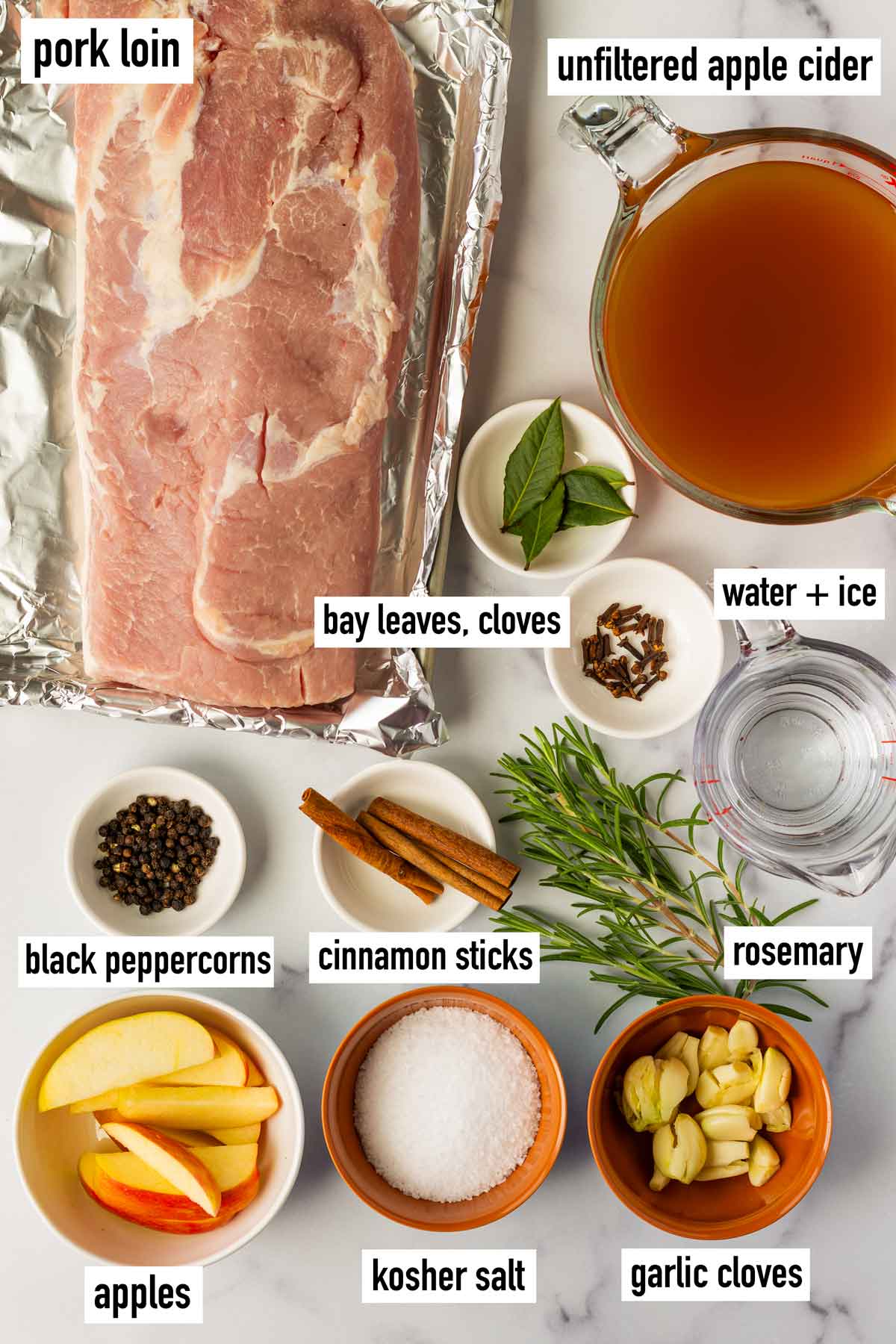

For the pork and the brine:
- Pork loin: I use a 4 pound pork loin. Trim excess fat.
- Unfiltered apple cider: We’re using the fall beverage here, not to be confused with hard cider or apple cider vinegar. If you can’t find it, use unfiltered apple juice (such as Simply Apple Juice), the kind that is dark in color and comes refrigerated, not the clear ones that comes in boxes.
- Kosher salt: Kosher salt is best for brining due to the size of the crystals.
- Garlic: Peel fresh garlic cloves and then smash them.
- Rosemary, thyme, bay leaves: Fresh is best! For extra aromatic and herbaceous flavor.
- Cinnamon and black peppercorns: Fall spices add a warmth to the brine.
- Cold water and ice cubes: Helps to dilute the brine to balance the saltiness and cool it down quicker.
For the rest of the skillet:
- Dijon mustard, fresh herbs, salt, and pepper: You’ll brush the outside of the pork with mustard before searing to give the crust even more flavor and to help the herbs stick. For the herbs, I use minced rosemary, thyme, and oregano.
- Onions, granny smith and honeycrisp apples: For the skillet. I use a combination of tart and sweet apples that hold their shape and won’t get too mushy as they cook.
- Chicken broth: A little bit of broth prevents burning and creates a nice pan sauce from the natural juices of the pork.
- For the maple cider glaze: Maple syrup, Dijon mustard, and apple cider vinegar: Gives it a glossy, sweet and tangy finish.
- Olive oil
Quantities are listed in the recipe card down below, as always.
How to Make Apple Pork Loin Roast
Prepping for this apple cider brined pork loin is really easy! All your need is a little patience for the brine.
Step 1 | Brine for the pork
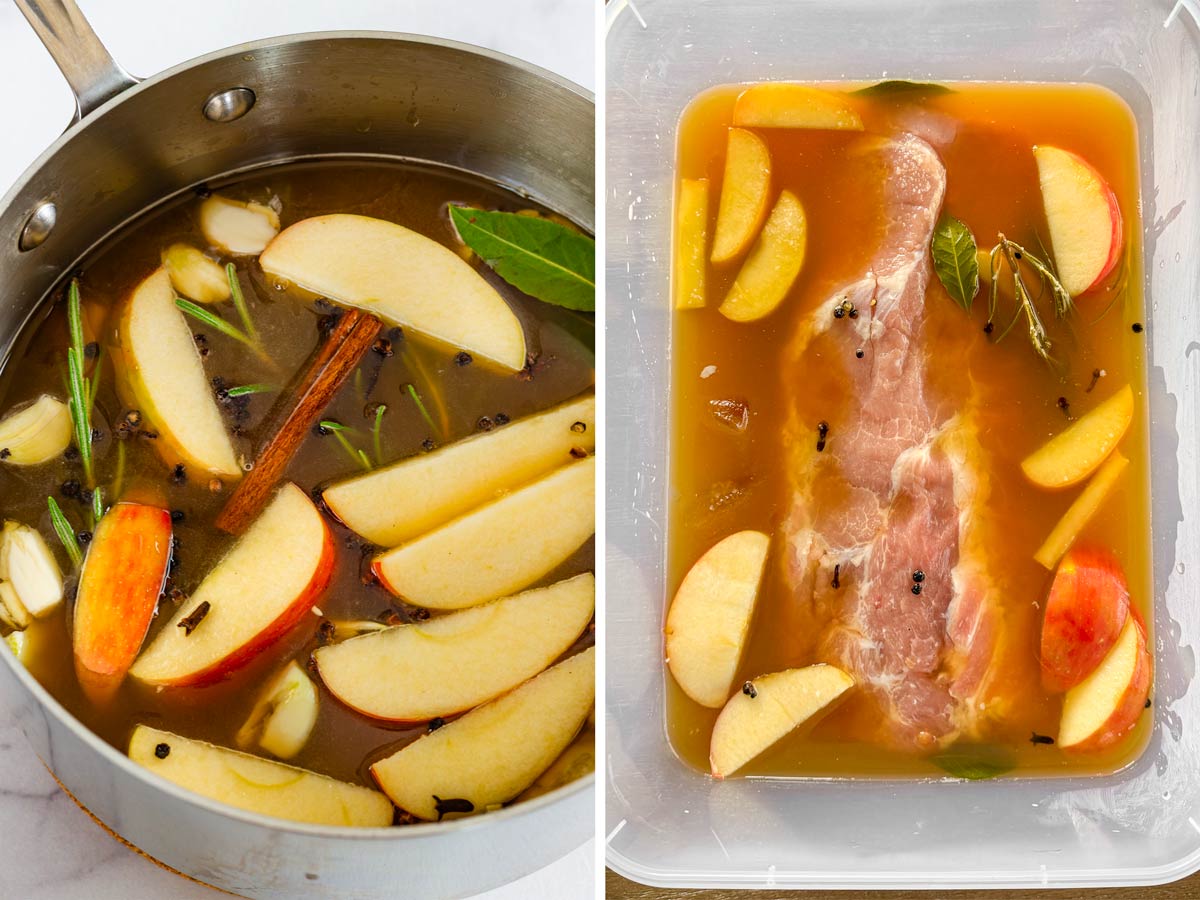
In a saucepan, combine the apple cider, water, Kosher salt, garlic, rosemary, thyme, bay leaves, cinnamon, and peppercorns. Bring the brine to a boil and then simmer for 5 minutes. Remove from the heat, add the cold water and ice, and let it cool completely.
Then, in a large container, brining bag, or large pot, submerge the pork loin in the cooled down brine. Cover and refrigerate for 16-18 hours.
Step 2 | The next day, sear and roast pork
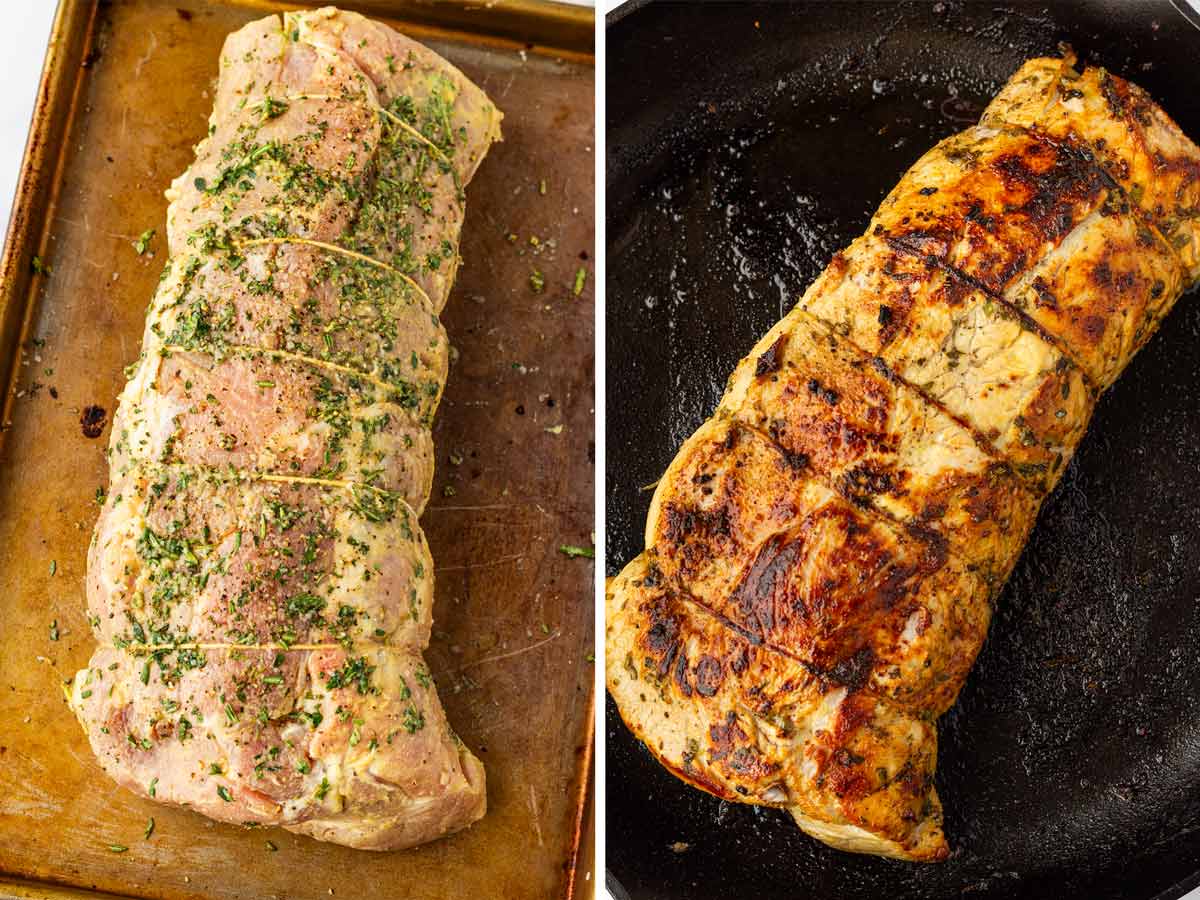
The next day, we’re ready to cook! Preheat the oven to 375°F. Pat the pork dry with paper towel, brush the exterior with mustard, and season with fresh minced herbs, Kosher salt, and pepper. You can tie with twine if desired. In a cast iron skillet, sear on all sides in olive oil.
Remove the pork, deglaze with a splash of broth or wine to prevent burning, and then return the pork. Roast in the oven, uncovered, for 25 minutes.
Step 3 | Add apples and glaze, roast
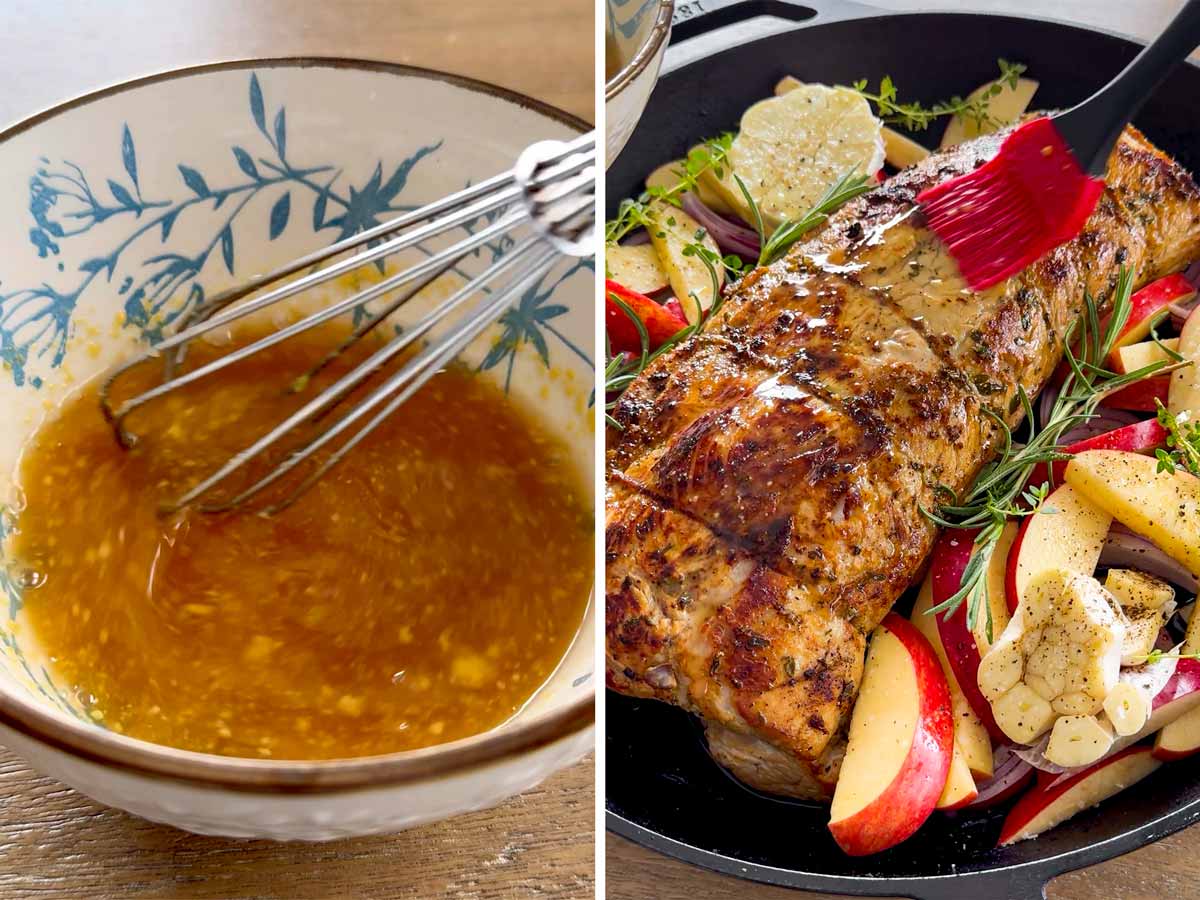
After that, remove from the oven and arrange the apples, onions, halved garlic heads, and fresh herb sprigs around the pork. Pour about ½ cup of the broth over the veggies and apples to keep them nice and moist.
In a small bowl, whisk the ingredients for the maple cider glaze together (see recipe card below). Brush the pork and vegetables with some of the glaze, return into the oven for another 30-35 minutes, brushing with the maple cider glaze again few times.
Step 4 | Rest, slice and serve
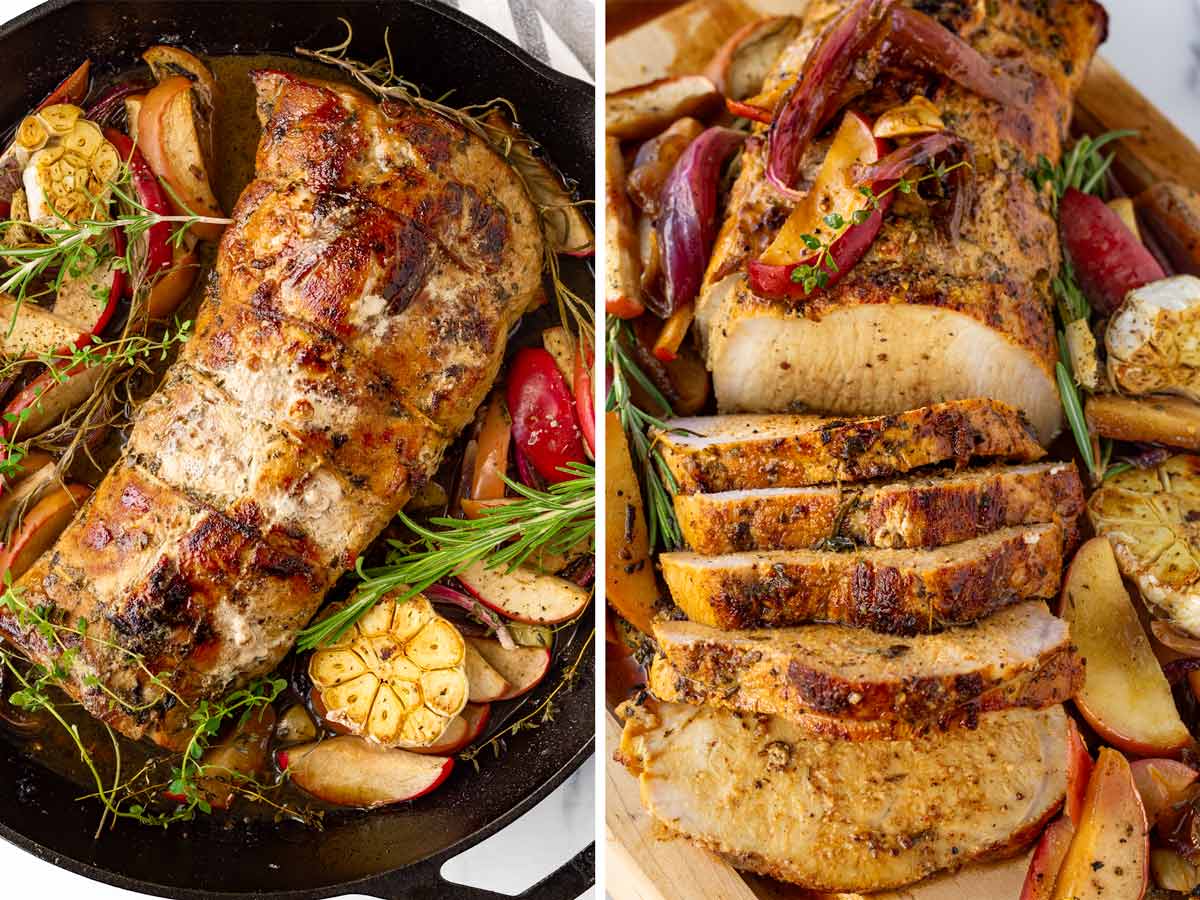
Our apple cider pork loin is ready when it reaches 150°F for medium or 155°F for well done. It will continue to rise about 5 degrees F as it rests. Let it rest for 15 minutes before slicing. Arrange the slices on a serving platter, drizzle your pork loin roast with extra maple cider glaze!
Tips for Success
- Pat the pork dry with paper towels. Remove the excess moisture will provide the best sear to lock in flavors and moisture.
- Tying the pork with kitchen twine can help to cook it evenly if your pork loin is unevenly shaped. I’d highly recommend it!
- Don’t skip deglazing the skillet. Scraping the bottom bits provides tons of flavor and prevents burning of the brown bits.
- Don’t skip the searing part. This builds flavor and helps lock in moisture.
- Use your favorite vegetables. Brussels sprouts, sweet potatoes, and squash as a few of my favorite variations.
- Use an instant read thermometer to know exactly when your pork should be taken out, it will depend on how large your pork loin is. 145ºF for medium rare, 150-155ºF for medium, and 160ºF for medium-well.
- Remember, the internal temperature will rise by another 5 degrees while resting.
Recipe FAQs
This will depend on your preference. 145°F is the minimum internal safe temperature for pork. I personally cook it to medium at 150°F and let it rest and rise closer to 155°F for a final medium-well.
Not if you take it out on time! Leave the pork loin soaking for no longer than 20 hours. Ideally, the brine time should be between 16 to 18 hours. Also, make sure to follow the salt to liquid ratios for the brine in the recipe.
You can use refrigerated unfiltered apple juice, like Simply Apple juice, not the diluted apple juice that usually comes in boxes.
Make Ahead and Storage
The apple cider brine itself can be made up to 3 days in advance and refrigerated, which gives it plenty of time to cool. After adding the pork into the brine, because the brining process is at least 16 hours, it’s a make ahead recipe as is.
Store leftovers in an airtight container for up to 3-4 days. Reheat in in the microwave oven with a splash of broth to ensure it’s moist again.
Pairing and Serving Ideas
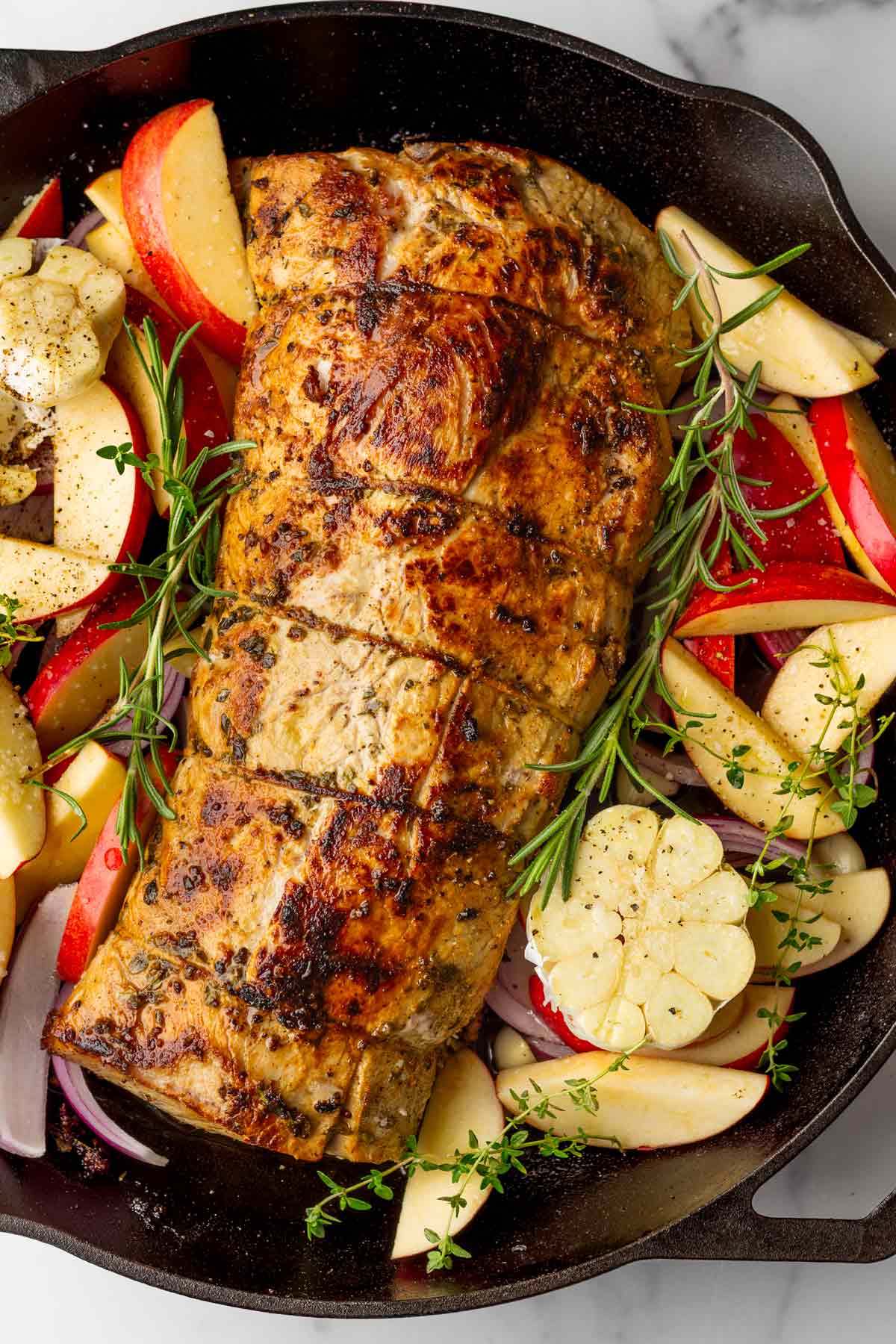
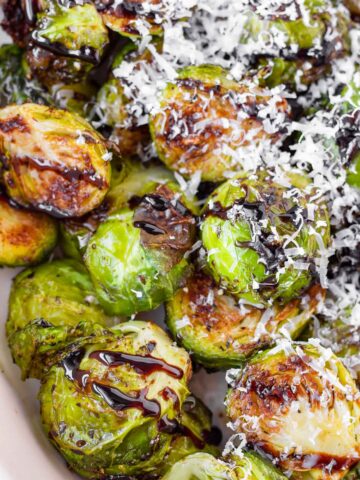
This apple cider brined pork loin is a comforting showstopper main dish, so it’s only fitting to have some easy fall side dishes to pair with it. These are my favorites!



I’d love to hear from you! If you loved my recipe, please consider leaving a 5-star rating and a comment down below. Sign up for my newsletter and follow along on Instagram, Facebook, or Pinterest

Apple Cider Brined Pork Loin
Equipment
- 14-inch cast iron skillet or a large pan
Ingredients
For the brine and pork
- 4 pounds pork loin - excess fat trimmed
- 3 cups unfiltered apple cider - not apple cider vinegar
- ⅓ cup Kosher salt
- 8 cloves fresh garlic - peeled and smashed
- 6 sprigs fresh rosemary and thyme
- 4 bay leaves - dried or fresh
- 2 sticks cinnamon
- 1 tablespoon black peppercorns
- 1 cup cold water
- 3 to 5 cups ice cubes - as needed
To brush and season the pork
- 4 tablespoons dijon mustard
- 3 tablespoons fresh minced herbs - rosemary, thyme, oregano
- 2 teaspoons Kosher salt
- 1 teaspoon ground black pepper
- Olive oil - for searing
For the vegetables and apples
- 2 medium apples - honeycrisp and granny smith
- 1 red onions - cut into thick slices
- 2 garlic heads - split in half across
- 4 sprigs fresh rosemary and thyme
- ½ cup Chicken broth - plus more as needed, or vegetable broth
Maple cider glaze
- ½ cup maple syrup
- 2 tablespoons dijon mustard
- 2 tablespoons apple cider vinegar
Instructions
- Make the brine: In a saucepan, combine apple cider, water, Kosher salt (⅓ cup), garlic cloves, rosemary and thyme sprigs, bay leaves, cinnamon sticks, and whole peppercorns. Bring to a boil, then simmer for 5 minutes. Remove from heat, stir in 1 cup cold water and all the ice cubes. Let cool completely. before adding the pork. Note: Transfer to a shallow container to speed cooling, it needs to be completely cooled down.
- Brine the pork: Once the brine is completely cooled down, transfer to a container (or brining bag or a large pot) – the container should allow the brine to fully cover the pork. Add the pork loin into the brine, cover, and refrigerate for about 16-18 hours. Note: No more than ~20 hours, otherwise the meat can get too salty and/or texture can be affected.
- Oven: Preheat oven to 375ºF.
- Brush and season pork: Remove the pork from the brine and pat dry completely. Brush with mustard, and season all over with the fresh minced herbs, Kosher salt (2 tsp) and ground black pepper (1 tsp), pressing to adhere. Optional: Tie with kitchen twine for even cooking.
- Sear pork and roast: In a large cast iron skillet over medium heat, heat a few drizzles of olive oil and sear the seasoned pork on all sides. Remove from the pan, then quickly deglaze with a splash of broth or wine. Return the pork into the skillet, then transfer to the oven. Roast for 25 minutes, uncovered.
- Meanwhile make the maple cider glaze: In a bowl, whisk the maple cider glaze ingredients until combined. Set aside.
- Add apples and veggies, glaze: Remove the pork from the oven, then arrange apples, onions, garlic heads, and fresh herb sprigs. Add broth (about ½ cup) over the vegetables and apples. Brush with some of the glaze.
- Finish cooking: Return to the oven and continue roasting for another 30-35 minutes, brushing with the glaze a few more times.
- It’s ready when the center of the pork loin reaches your desired temperature (150ºF for medium, 155ºF for well-done, it will rise by about 5 degrees as it rests). Let the pork rest for 15 minutes before serving. Finish with more of the glaze and serve!
Notes
- Important! Let the brine cool down completely before adding the pork for safety.
- Brining time: At least 16 to 18 hours, but no more than 20 approximately, otherwise it can get saltier than ideal.
- Don’t skip the searing part. This builds flavor and helps lock in moisture.
- Use an instant read thermometer. The safe temperature is 145ºF for pork. Roast to 150°F for medium or 155°F for well-done; the temperature will rise about 5°F as it rests.
- Rest before slicing. Let the pork rest for at least 15 minutes to keep it juicy and ensure clean slices.
- The brine can be made up to 3 days ahead and refrigerated. Leftover pork keeps well for 3-4 days; reheat gently with a splash of broth to prevent drying out.
- Apple cider: If you can’t find apple cider, use unfiltered apple juice such as Simply Apple Juice.
- Use other vegetables! Brussels sprouts, butternut squash, and sweet potatoes are great options.






Leave a Reply