

Dan Dan Noodles! If you’re craving a bowl of saucy noodles with savory, spicy Sichuan flavors, this authentic dan dan noodle recipe is a must-try!
They’re home cooked comfort: chewy noodles tossed in a creamy sesame sauce, and topped with savory ground pork and crunchy peanuts for a delicious dinner!
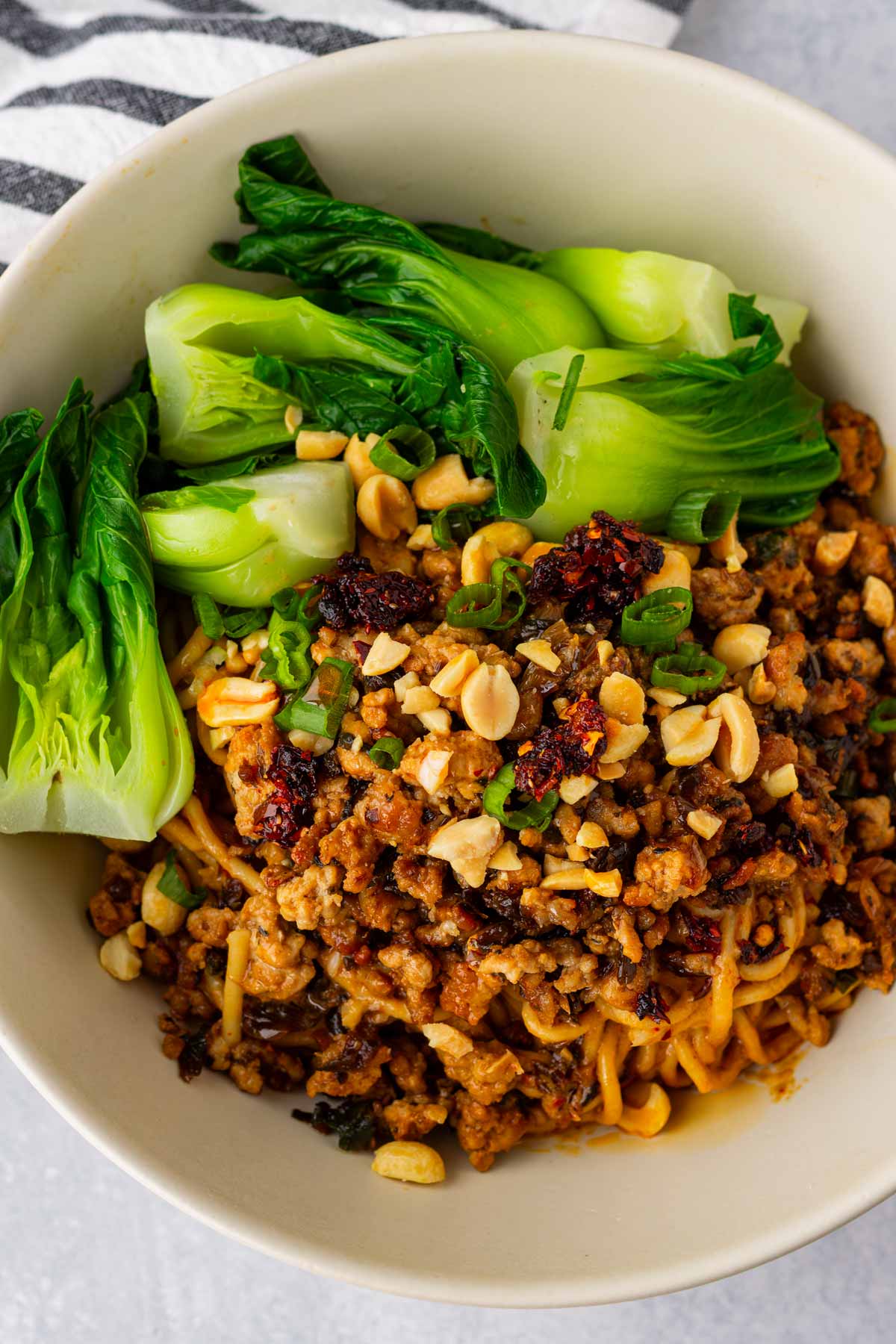
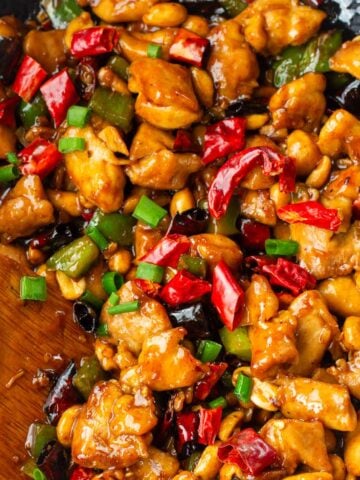
Dan Dan Noodles (“dan dan mian”) bring bold, authentic Sichuan flavor with a creamy, nutty sauce and just the right amount of “mala” flavor, aka that delicious signature numbing heat from Sichuan peppercorns, similar to Kung Pao Chicken flavors.
You’ll want to make a quick trip to your local Asian market for key ingredients like Chinese sesame paste, Sichuan peppercorns, and the signature ingredient – sui mi ya cai – a preserved mustard green that packs flavor (all details below). It’s worth the extra effort for the most authentic taste.
Much like my other Chinese noodle dishes like Shrimp Lo Mein or Beef Chow Fun, a bowl of saucy dan dan noodles is comfort food made in just 30 minutes. Once your ingredients are prepped, it comes together fast.
Jump to:
Why I Love This Recipe
- Great flavor! It’s got that signature mala spice, and it’s got big flavors!
- Perfect creamy consistency. The creamy sesame paste sauce hits just right – it’s not too thick or dense.
- Authentic. Stays true to its Sichuan roots with its savory flavor profile and heat. Detailed info on the ingredients you need, including substitutions, below.
- Quick and easy. Once you’ve prepped all your ingredients, everything happens fast! It’s a great 30-minute weeknight dinner.
Ingredient Notes
Below, I included a few notes from recipe testing that I hope you find helpful. We’ve tested this dan dan noodles recipe more times than we can count! Quantities located in the recipe card down below.
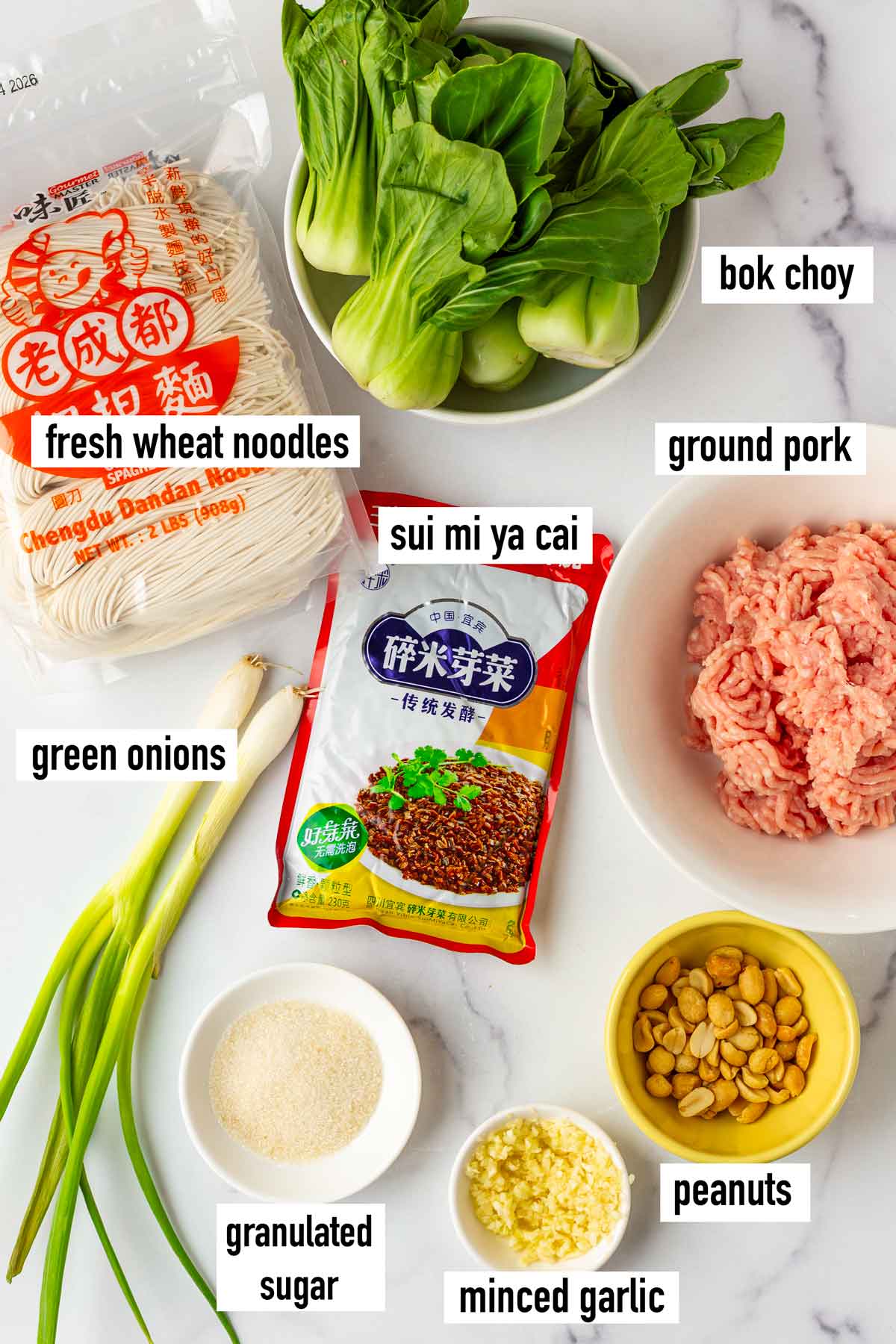
- Ground pork: Dan dan noodles are traditionally made with ground pork, so that’s what we’re going with here.
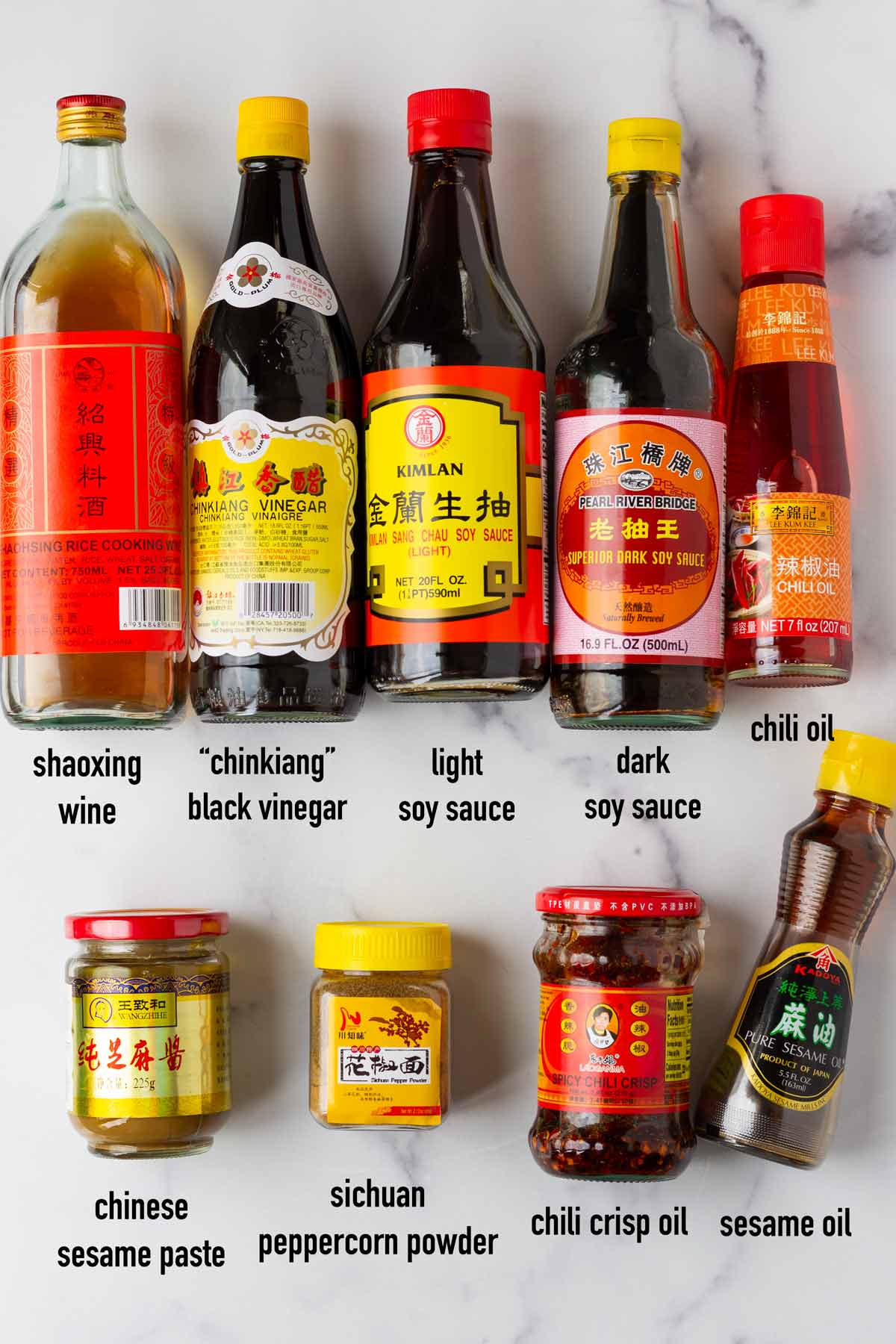
- Chinese sesame paste: You can find it on Amazon if you can’t find it in store. You can also use tahini if you have some. Note that it will be separated (oil and solids) and needs to be stirred before using. You also need to dilute it with hot water because the paste is thick.
- Fresh wheat noodles: You’ll find these in the refrigerated section. The noodles are a bit chewy and have a nice bite to them.
- Sui mi ya cai: Preserved mustard greens. It’s a salty ingredient and key to making this dish as authentic as possible. It can sometimes be hard to find in store, but it’s available online.
- Sichuan pepper powder: The key ingredient to get that Sichuan spicy flavor.
- Chili oil: For a bit of extra heat. I use the Lee Kum Kee brand.
- Chili crisp: A popular brand of this oil is Lao Gan Ma. You’ll love the crunchy bits, it adds a fun texture.
- Light and dark soy sauce: We’re using light soy sauce for saltiness and dark soy sauce for color.
- Black vinegar and Shaoxing cooking wine: Black vinegar, also called Chinkiang vinegar, brings a malted element, once again adding to the complexity of flavors. Shaoxing wine is the most common type of Chinese cooking wine.
- Other: Sesame oil, granulated sugar, minced garlic, scallions
- For serving: Toasted crushed peanuts, baby bok choy, more scallions.
Common Substitutions
- Chinese sesame paste: Tahini is the closest. Alternatively, peanut butter may work too, but since it’s sweet, skip the added granulated sugar.
- Fresh wheat noodles: Udon noodles or thick spaghetti will work in a pinch.
- Sui mi ya cai: This is a unique ingredient, but if you can’t find it, try finely chopped salty pickles.
- Black vinegar: Malt vinegar.
- Shaoxing wine: Dry sherry.
Ingredient Spotlight: “Sui Mi Ya Cai” and Fresh Noodles
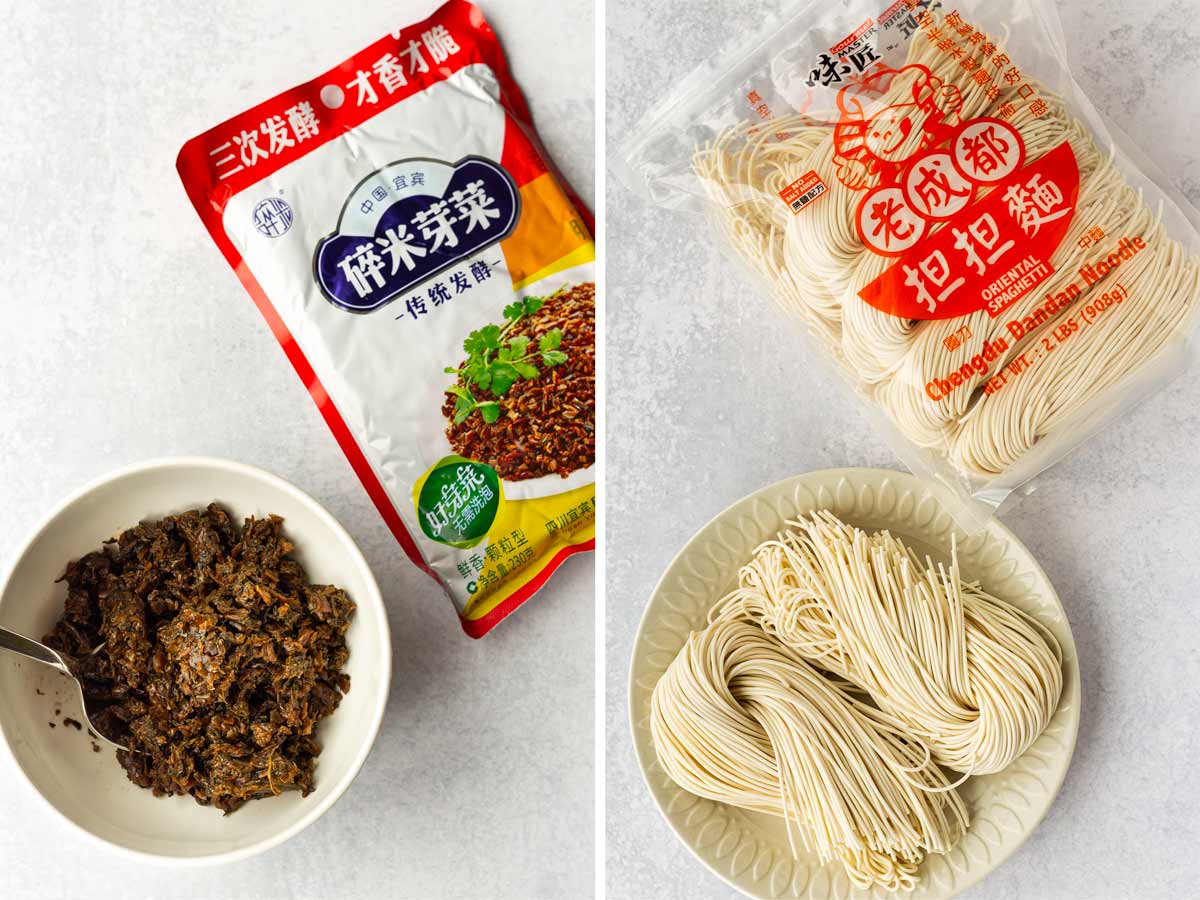
Sui Mi Ya Cai: The savory pop in authentic Dan Dan Noodles comes from “sui mi ya cai.” These are mustard greens from Sichuan, fermented with salt, sugar, and spices. You can find these in small vacuum-sealed bags at most Asian grocery stores or on Amazon. See photo below.
Noodles: Any type of fresh (or frozen), thick wheat noodles will work. They usually come in the refrigerated section.
How to Make Dan Dan Noodles
Once you’re prepped and ready to go, it’s quite quick and easy. It usually takes just 30 minutes. Let’s make it!
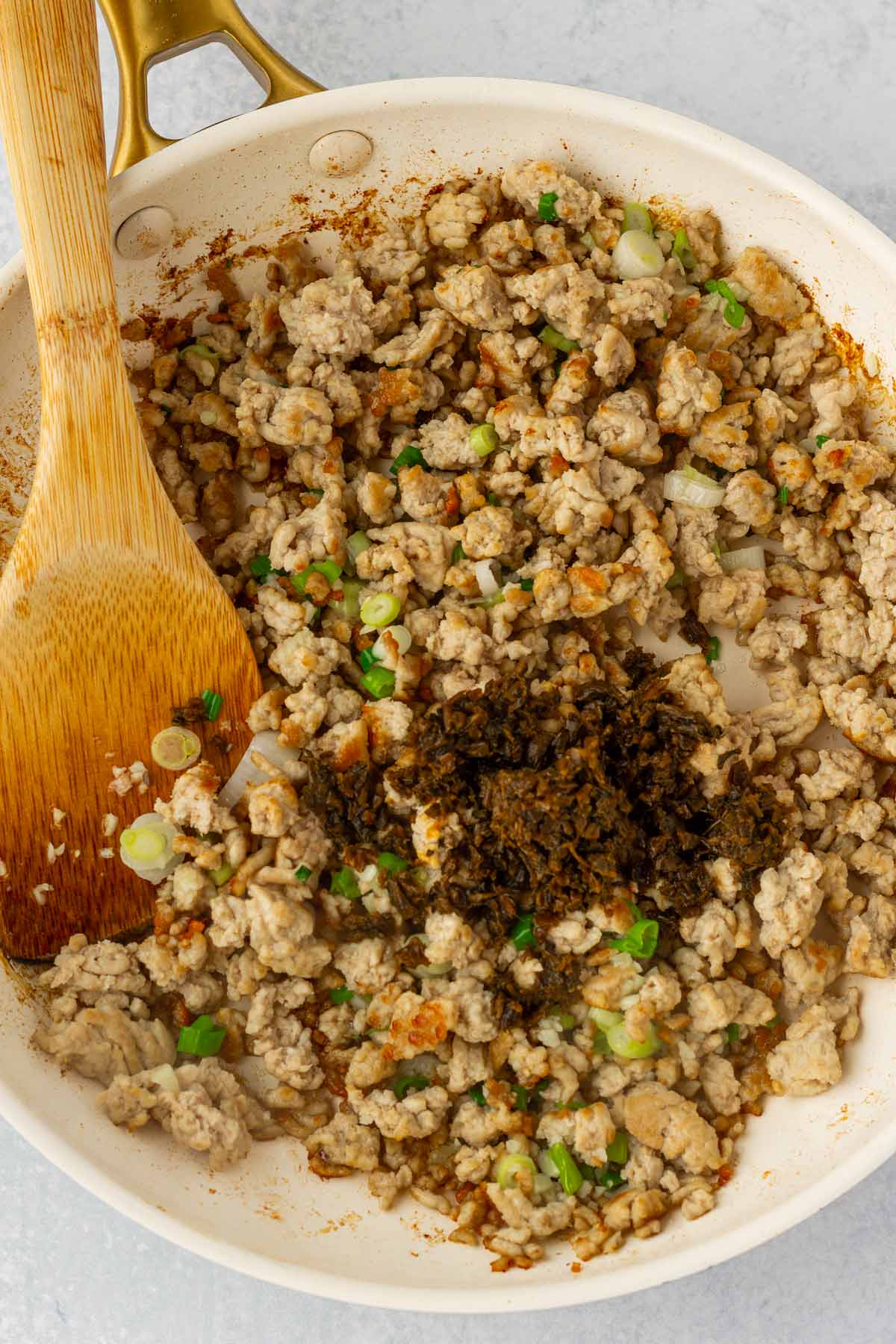
Step 1: The ground pork topping. Cook ground pork until browned, breaking it up as it cooks. Push to the side, add a little more oil, and sauté the garlic, scallion whites, and the sui mi ya cai until fragrant.
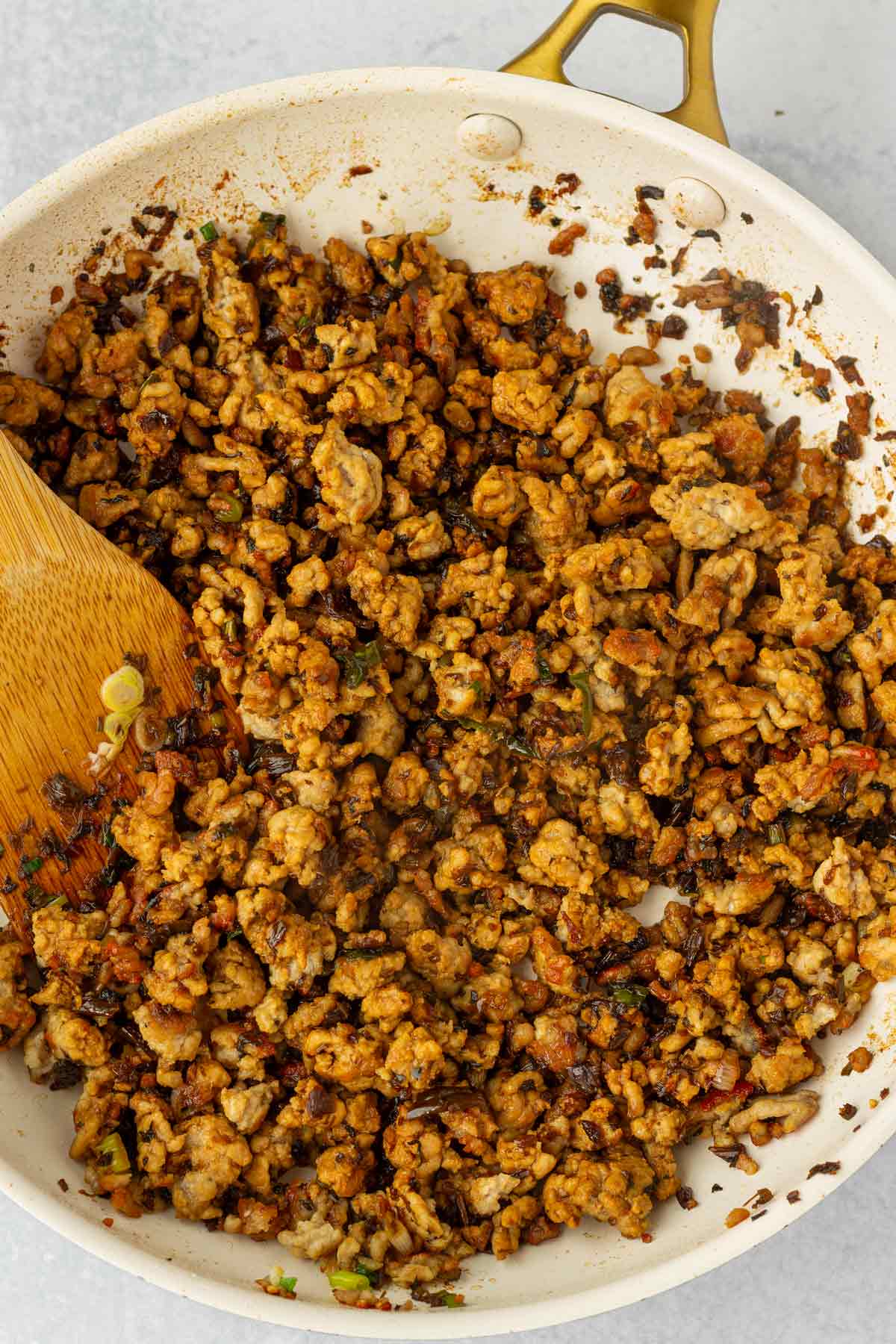
Step 2: Season pork. In a bowl, whisk the shaoxing wine, light and dark soy sauce, and granulated sugar. Pour this sauce into the skillet with the pork, and cook for 2 more minutes to soak flavors.
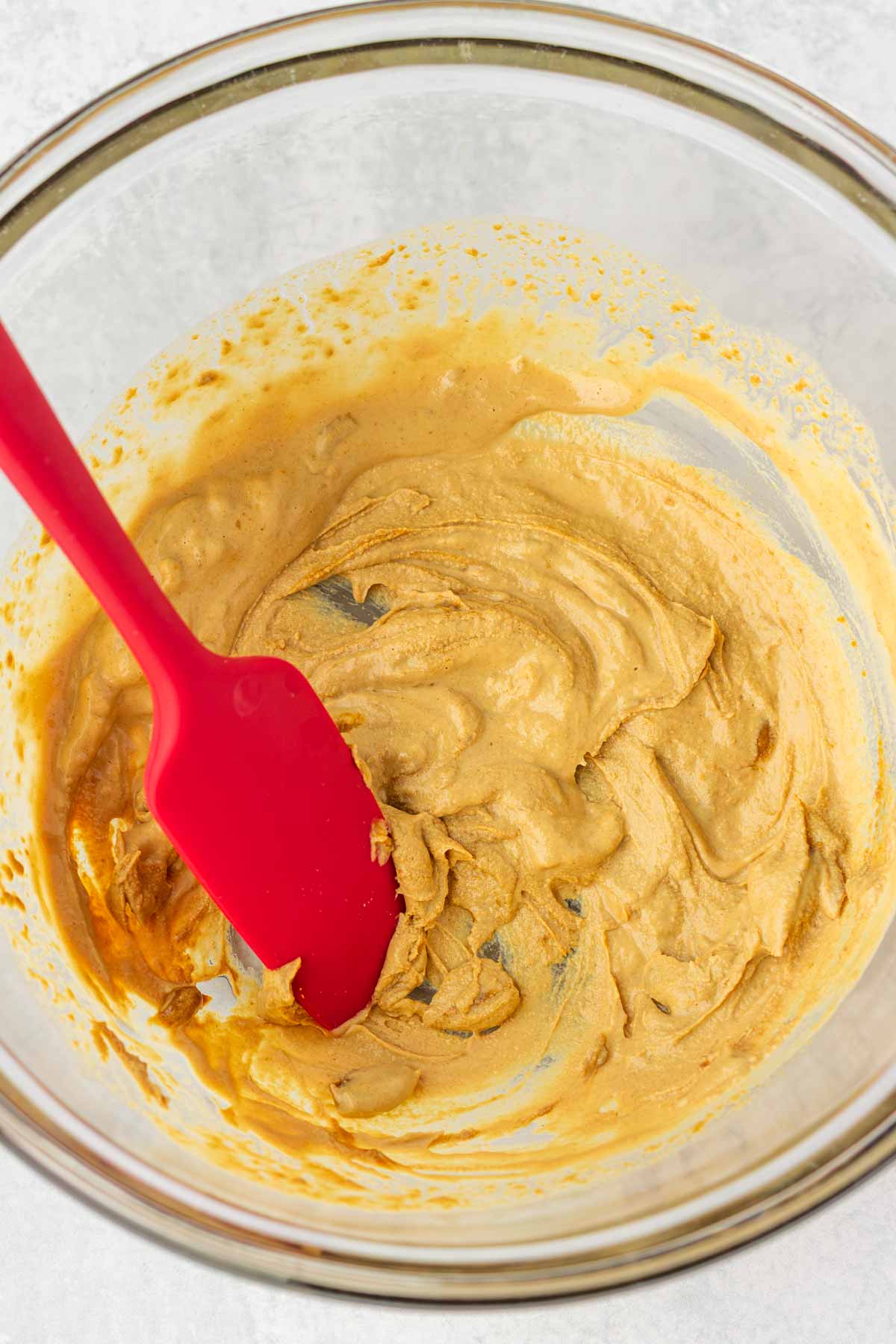
Step 3: Thin sesame paste. In a bowl, add sesame paste and dissolve it with hot water. Sesame paste is quite thick, so you need to thin it out this way first, otherwise the noodles will be dense.
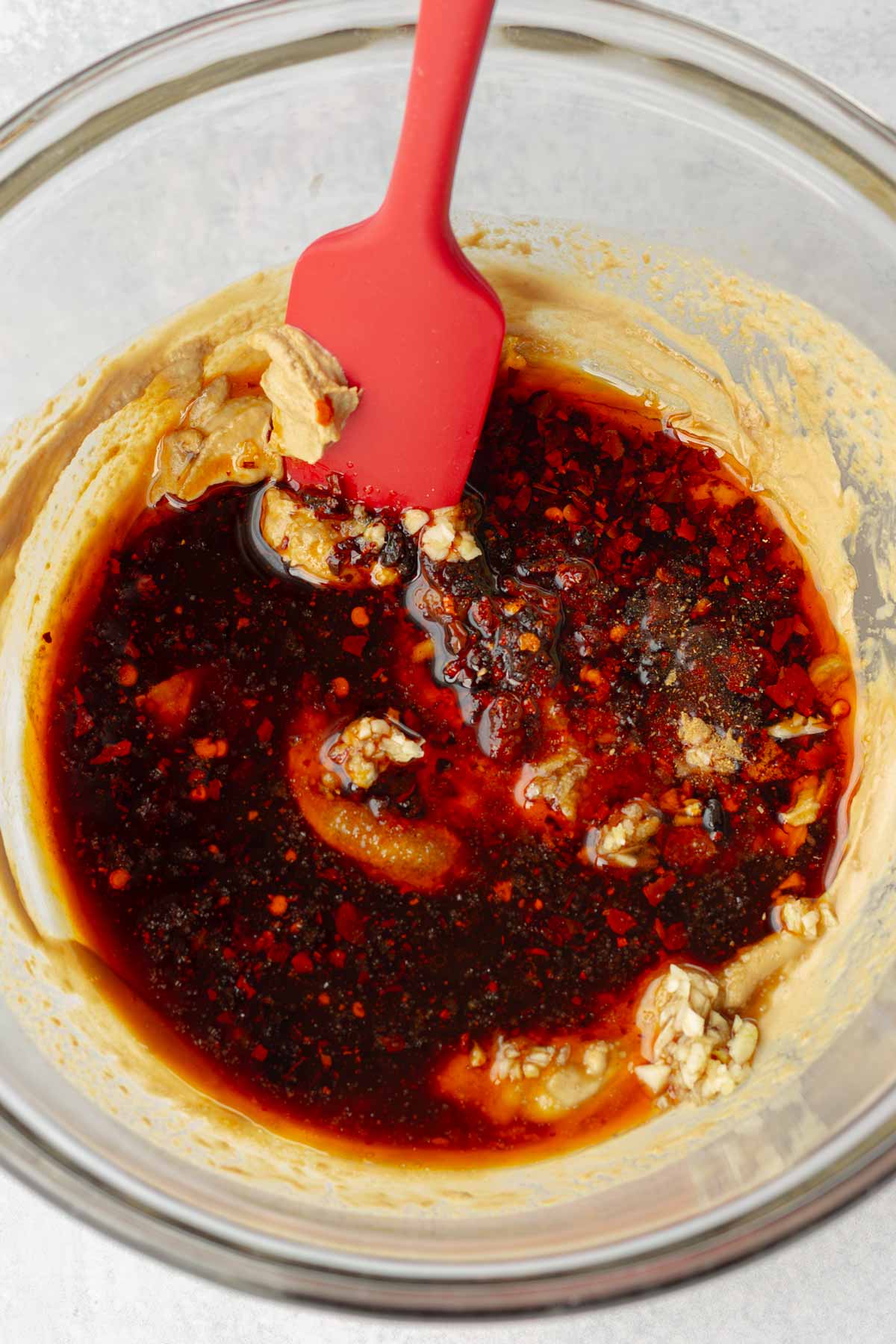
Step 4: Make the creamy sauce. Add the remaining dan dan sauce ingredients and mix until smooth and creamy, but still somewhat thin. It will get creamier when tossed with the starchy noodles. Adjust the spice to taste.
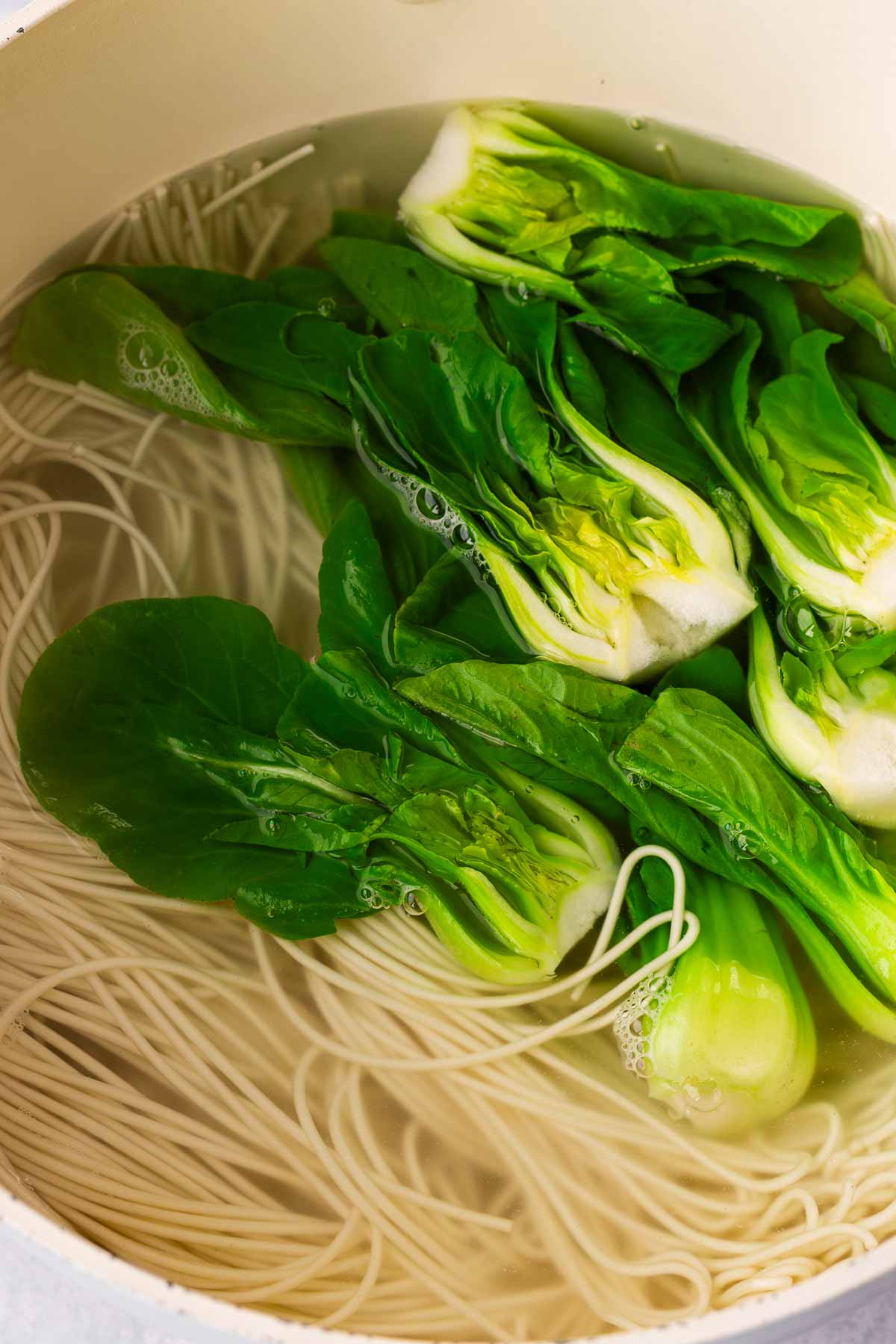
Step 5: Cook noodles and vegetables. Boil the noodles and bok choy together for just 3-5 minutes until tender.
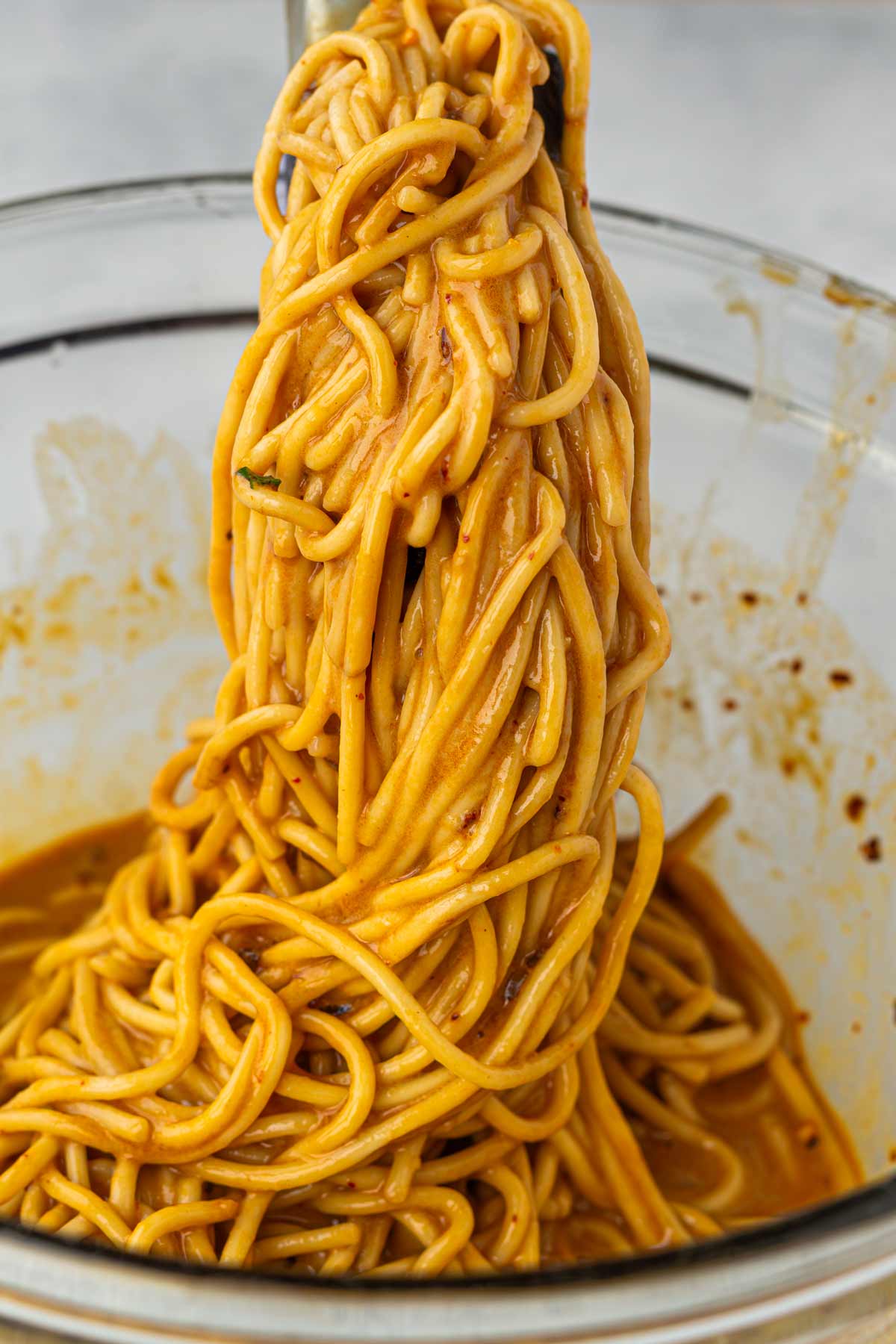
Step 6: Toss noodles with sauce. The noodles should still have a bite. Add directly to the sauce, including some of the starchy water as needed. Toss until coated.
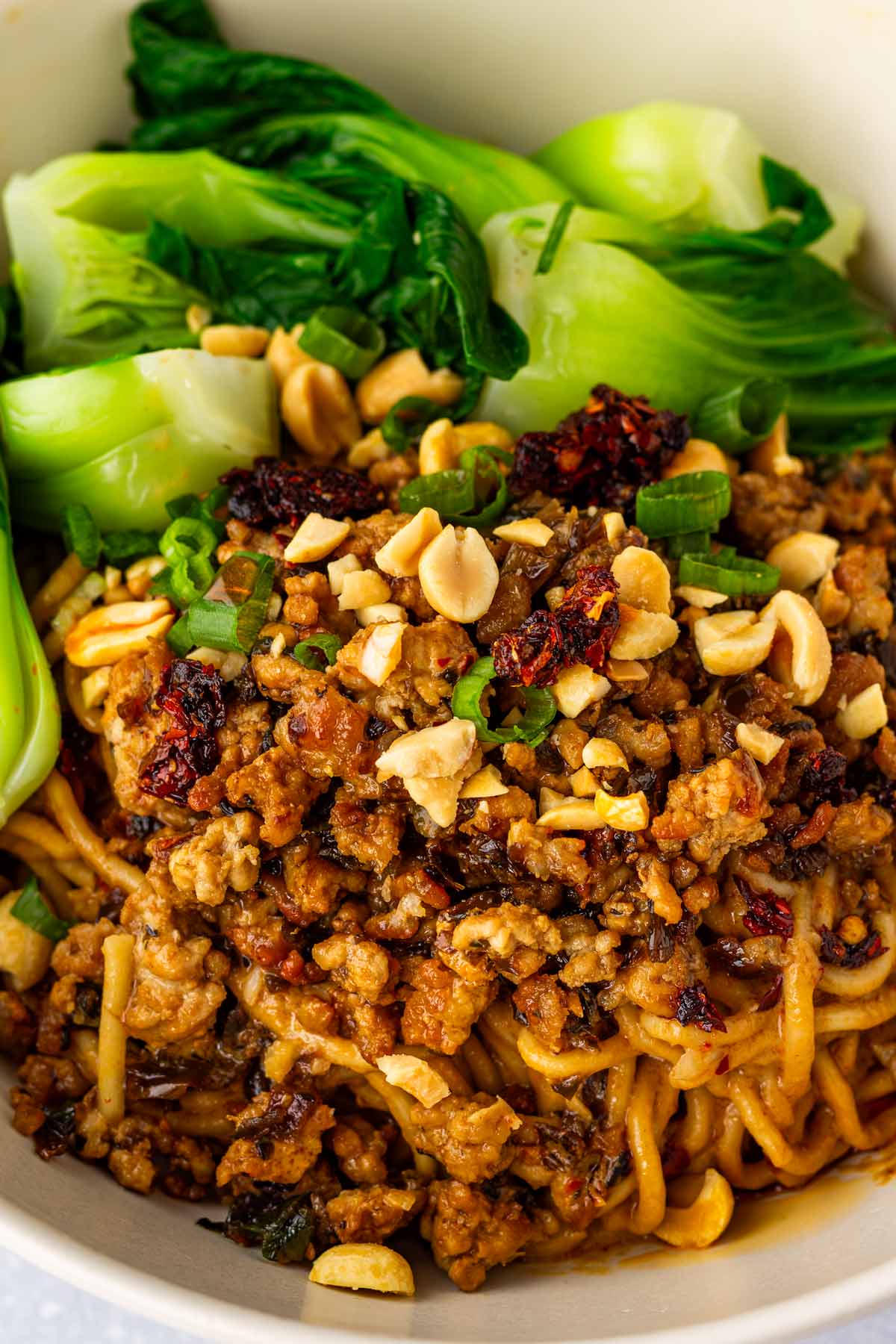
Step 7: Build the dan dan noodle bowls. Top with cooked ground pork, baby bok choy and toasted crushed peanuts. Garnish with scallions, a drizzle of chili oil, and chili crisp.
Tips for Success
- Use fresh wheat noodles. They soak up the sauce better and deliver a chewy bite! You can find them in the refrigerated or frozen section at most Asian grocery stores.
- Don’t overcook the noodles. They should be cooked until just tender, and should have a slightly chewy texture.
- Chinese sesame paste: When you open it, you’ll notice it may be separated (oils and solids). Give it a good stir before using. Also, sesame paste is thick, so you’ll need to dilute it with hot water to loosen it up, otherwise your dan dan noodles will be too thick.
- Adjust spice level to your liking. Sichuan peppercorn powder, chili oil, and chili crisp oil (all the spicy components in dan dan noodles), can be quite spicy, so adjust to taste.
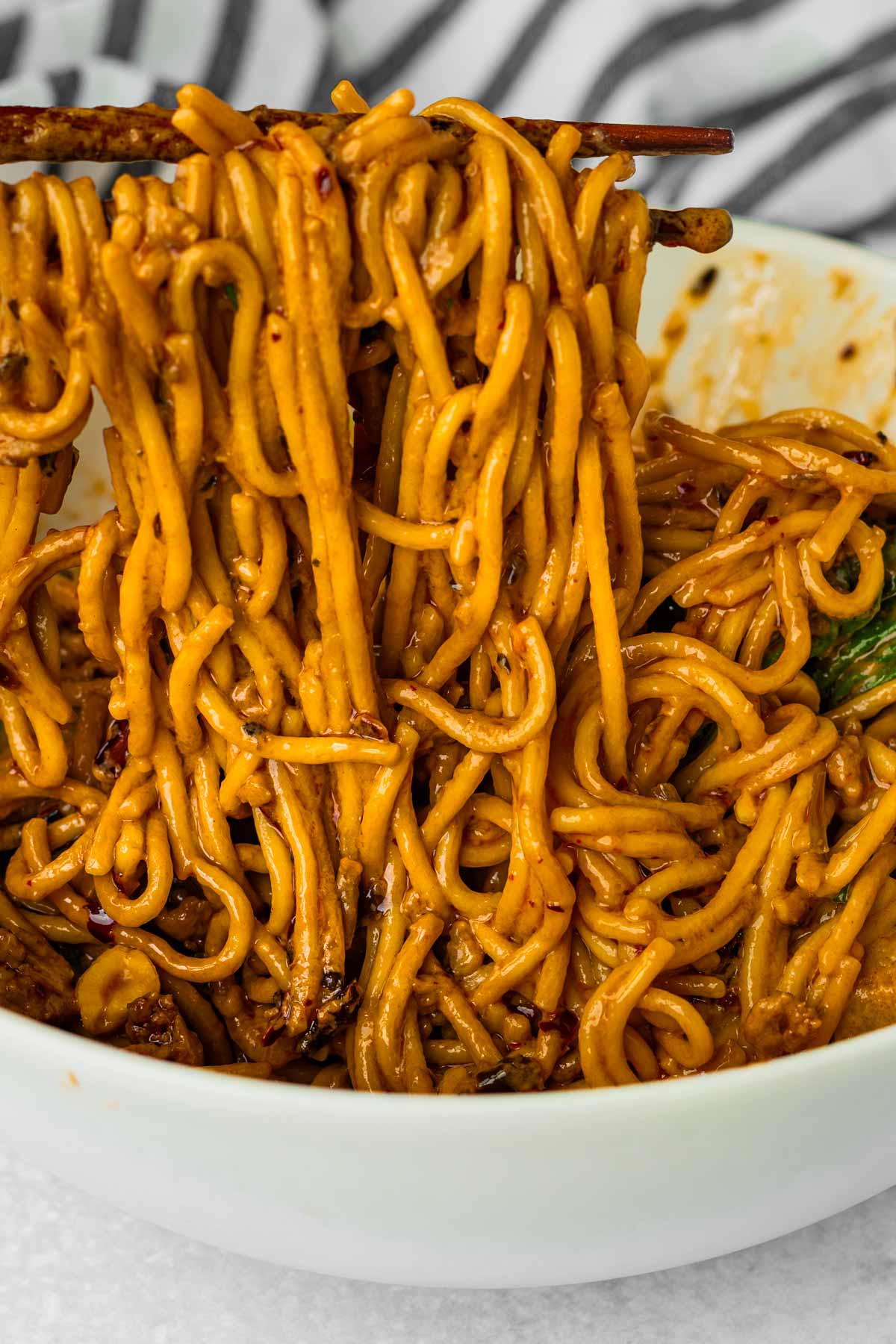
- Best served immediately for the best creamy and saucy texture!
Recipe FAQs
While there isn’t one single ingredient that fully replaces it, pickles (or pickled mustard greens, if you can find that) will work in a pinch. You can find “siu mi ya cai” online too.
Fresh, thick wheat noodles from the fridge in your local Asian market. They soak up the flavor of the sauce and have a great chewy bite to them.
The closest substitute is tahini. You can also use peanut butter (flavors may be a bit different), but skip the granulated sugar since it’s already sweet.
Yes! Add some to taste to the pork in the skillet.
Dan dan noodles are best served immediately. If you make the sauce ahead, it will thicken. However, you can cook the ground pork topping up to 3 days ahead. When ready to eat, just make the sauce, cook the noodles and veggies, and toss with the pork.
More Authentic Chinese Recipes

I’d love to hear from you! If you loved my recipe, please consider leaving a 5-star rating and a comment down below. Sign up for my newsletter and follow along on Instagram, Facebook, or Pinterest
Dan Dan Noodles
Ingredients
For the pork and sauce for the pork:
- 1 tablespoon Chinese shaoxing cooking wine - or dry sherry
- 2 tablespoons light soy sauce
- ½ teaspoon dark soy sauce
- 1 teaspoon granulated sugar
- ¾ pound ground pork
- 3 cloves garlic, minced
- 2 scallions, sliced - white parts only
- 2 tablespoons sui mi ya cai - see notes for substitutions
For the creamy dan dan noodle sauce:
- 2 tablespoons Chinese sesame paste - or tahini
- 3-4 tablespoons hot water - plus more as needed to loosen the sauce
- 2 cloves very finely minced garlic
- 2 tablespoons light soy sauce
- 2 tablespoons black vinegar - aka Chinkiang vinegar, see notes
- 1 teaspoon sesame oil
- 2 tablespoons Chinese chili oil
- 1 tablespoon chili crisp - I use Lao Gan Ma brand
- 1 teaspoon granulated sugar
- ¼ teaspoon Sichuan peppercorn powder - adjust to taste
Noodles and rest of the toppings:
- ½ pound fresh wheat noodles - refrigerated, thaw if frozen
- ¼ cup lightly crushed toasted peanuts
- Baby bok choy
- Scallions - green parts, for garnish
Instructions
- Cook the pork: In a skillet, heat a few drizzles of oil over medium heat. Cook the ground pork until fully cooked and golden brown, breaking it up as it cooks. Push to the side of the skillet, then saute minced garlic, scallions (white parts), and sui mi ya cai (the pickled mustard greens) until fragrant.
- Make the sauce for the pork: In a bowl, whisk the shaoxing wine, light soy sauce, dark sauce, and granulated sugar. Bring everything back together, then add this to the pork. Toss until combined and cook for another 2 minutes. Set aside for later.
- Make the creamy dan dan noodle sauce: In a bowl, add 2 tablespoons sesame paste and dissolve it with about 3-4 tablespoons of hot water, as needed. Then add the rest of the ingredients for the dan dan sauce. Mix and combine, adjusting the spicy ingredients to taste. The sauce should be creamy and somewhat runny (not too thick or pasty). Set aside.
- Cook noodles and bok choy: In a pot with simmering water, cook noodles and bok choy together for just 3-5 minutes, or according to package directions. Do not overcook the noodles, you want them to have a bite.
- Assemble noodle bowls: Toss the noodles with the creamy dan dan sauce, adding a splash of starchy water as needed. Divide up the nooldes into 2 serving bowls, and top with the pork topping, crushed peanuts, and baby bok choy. Garnish with scallions (the green parts), chili oil, and chili crisp to taste. Serve immediately.
Notes
- Sui mi ya cai: This is a salty Chinese preserved mustard green. It can be purchased online – see ingredient link. Substitutions include 1) chopped pickled mustard greens or 2) salty pickles (diced). though the flavor won’t be identical.
- Chinese sesame paste: This is thicker and more toasted in flavor than tahini. Stir well before using, as the oil often separates. Substitute with tahini (closest substitutions). Peanut butter works in a pinch, but it’s sweeter—skip the added sugar if using it.
- Always thin the sesame paste with hot water first since it can be quite thick. If using tahini, use less water.
- Noodles: Fresh or frozen thick wheat noodles are best. Udon or thick spaghetti are good substitutes if needed.
- Sauce consistency: The sauce should be pourable, not paste-like. It will thicken more when you add the starchy noodles.
- Don’t overcook noodles: Cook just until tender with a slight chew. Overcooked noodles won’t hold the sauce as well.
- Heat control: Adjust Sichuan pepper powder, chili oil, and chili crisp to taste.
- Make ahead? This recipe is best when served immediately so it stays saucy.
- Protein swaps: Ground chicken or turkey can be used instead of pork.



Cristina says
I am Chinese and I find these recipe authentic. Must try it!