

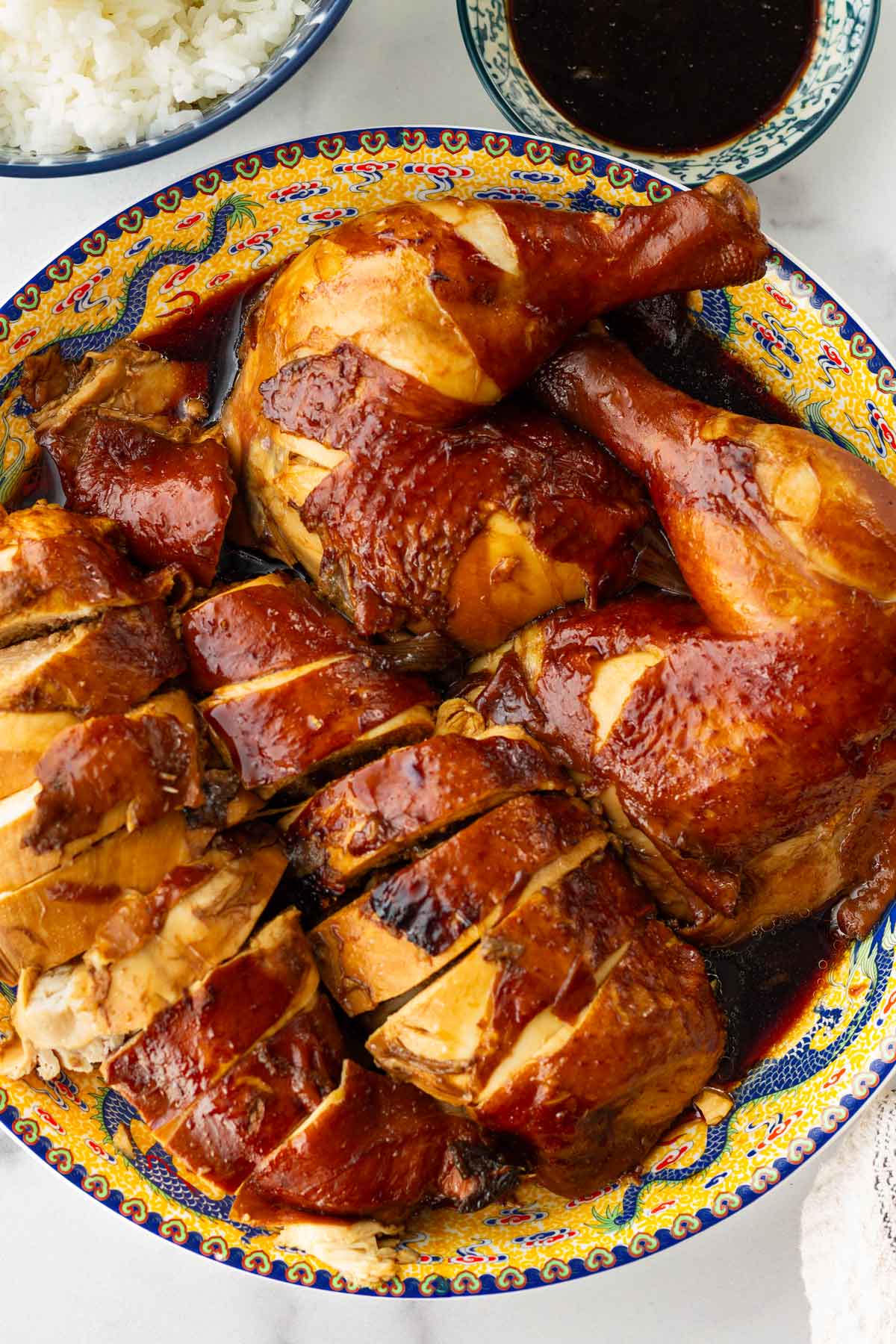
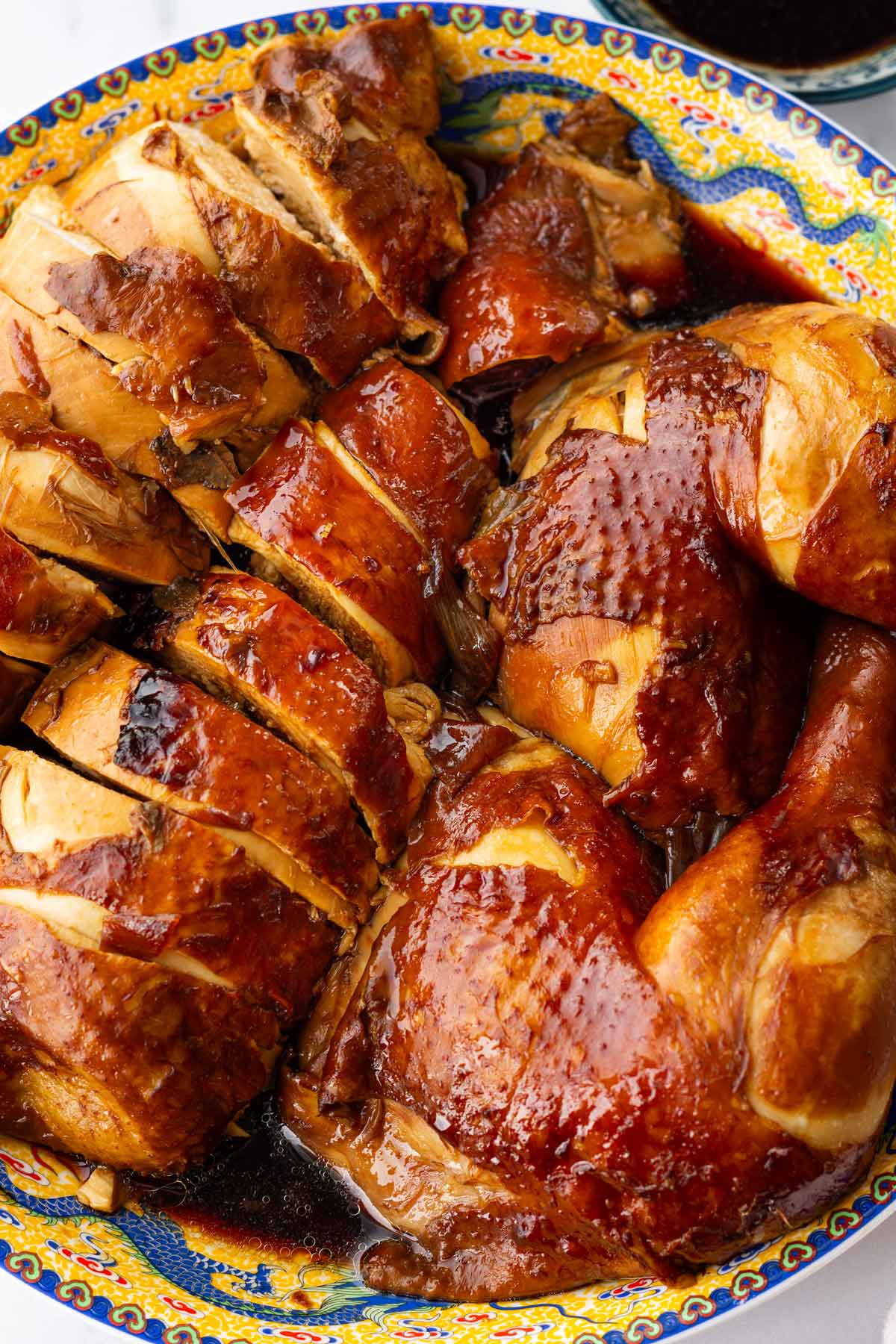
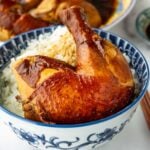
This is my family’s beloved recipe for Soy Sauce Chicken, a classic Cantonese dish. It looks impressive (Chinatown-style!), but it’s actually very easy to make at home. I use an easy stovetop poaching method that takes about 1 hour.
Known as “See Yao Gai” in Chinese, soy sauce chicken is gently poached in an aromatic soy sauce braising liquid until it turns into a glistening, deep amber color.
Quick Look: Soy Sauce Chicken
- Prep Time: 20 minutes, Cook Time: 50 minutes
- Total Time: 1 hour 10 minutes
- Method: Stovetop poaching
- Main Ingredients: Whole chicken, soy sauce, ginger, scallions, star anise
- Flavor Profile: Savory, umami-rich, lightly sweet, aromatic
- Ideal for: Authentic Cantonese cooking, family-style dinner, special occasion celebrations, Lunar New Year

Jump to:
Ingredient Notes
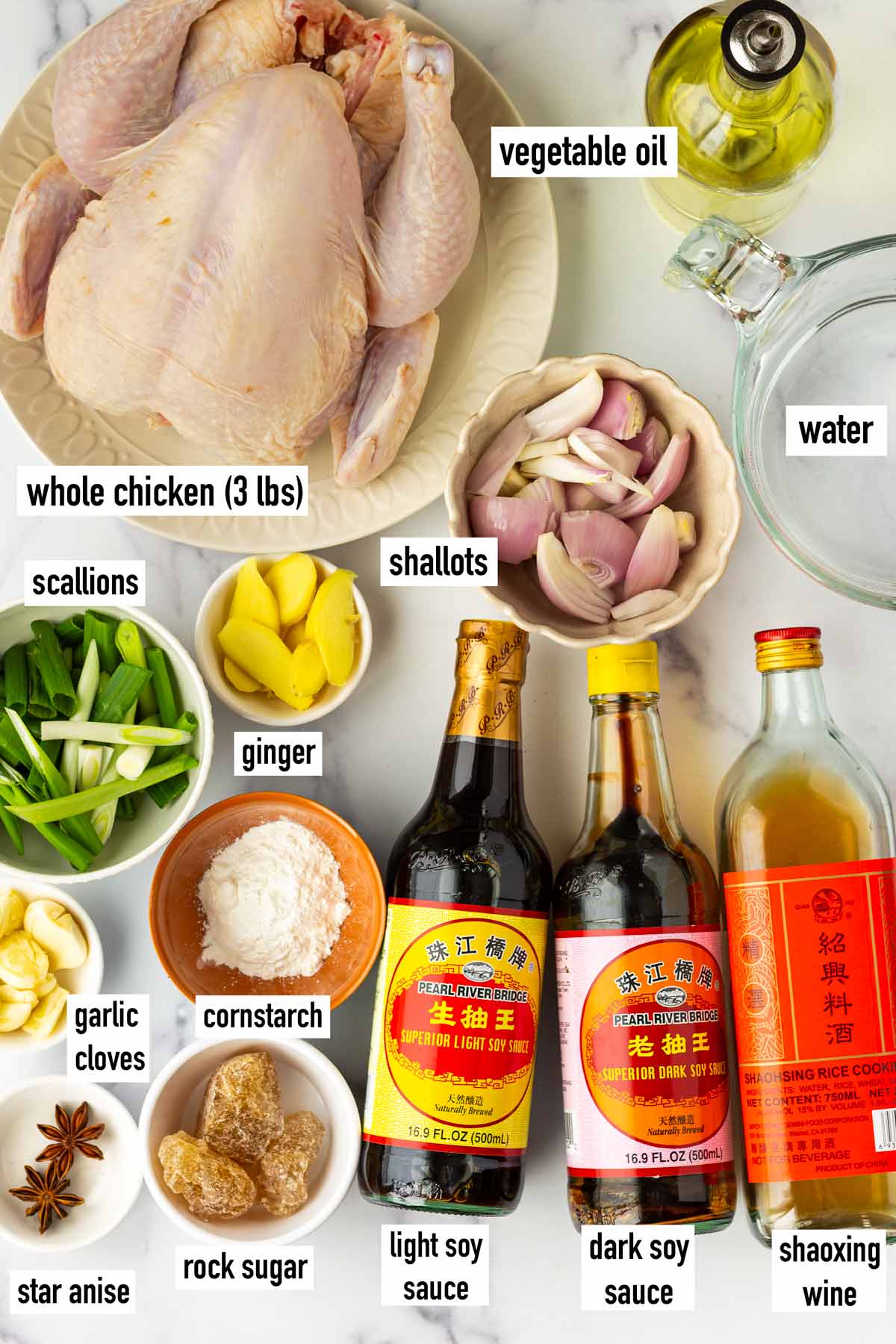
- Whole chicken: About 3 pounds chicken, which is relatively small, so it cooks fast. The fat and collagen released as it simmers, adds flavor and silkiness to every spoonful.
- Light soy sauce: Provides the foundation for the sauce.
- Dark soy sauce: Only use a little. It’s more concentrated than the light soy sauce and provides that deep, amber-brown color.
- Shaoxing wine: This is a fermented rice wine with a sweet, salty, and nutty flavor profile. Great for tenderizing meat and adding depth of flavor in stir fries, marinades, and sauces.
- Rock sugar: Commonly used in Chinese cooking, it adds a mild, clean sweetness, ideal for braises and glazes. You can find it online or at the Asian grocery store.
- Aromatics: Star anise pods, shallots, garlic, ginger, scallions (white and green parts). Aromatics need to be sautéed first to release flavors. They’re essential in Chinese cooking.
- Other: Vegetable oil, water.
Ingredient quantities can be found in the recipe card down below.
Substitutions and Variations
- Chicken pieces: When I crave Cantonese soy sauce chicken and fast, I use bone-in chicken thighs and drumsticks instead of a whole bird. It takes half the time and it’s just as delicious!
- Sugar: Brown sugar is the best substitute if rock sugar is unavailable.
- Shaoxing wine: Dry sherry is the most common substitution.
- Shallots: Red or white onions work too.
How to Make Soy Sauce Chicken
This soy sauce chicken recipe uses a simple poaching technique to gently cook the bird while allowing the skin to absorb the soy braising liquid.
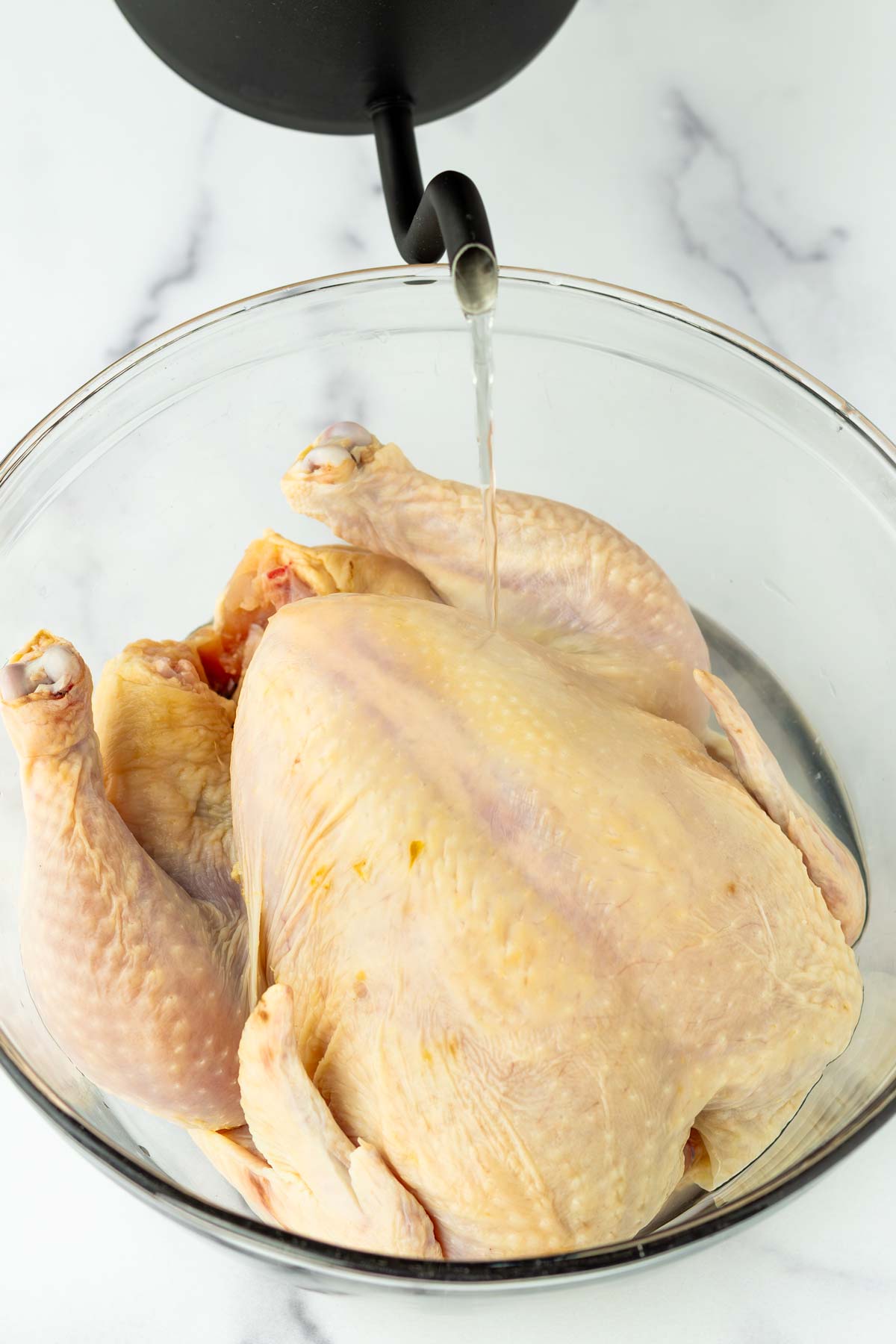
Step 1: Blanch chicken skin. Pat the chicken dry. Bring about 4 cups of water to a boil and carefully pour it over the chicken. Why? This step tightens the skin and renders surface fat, helping the soy sauce cling to the skin for better color.
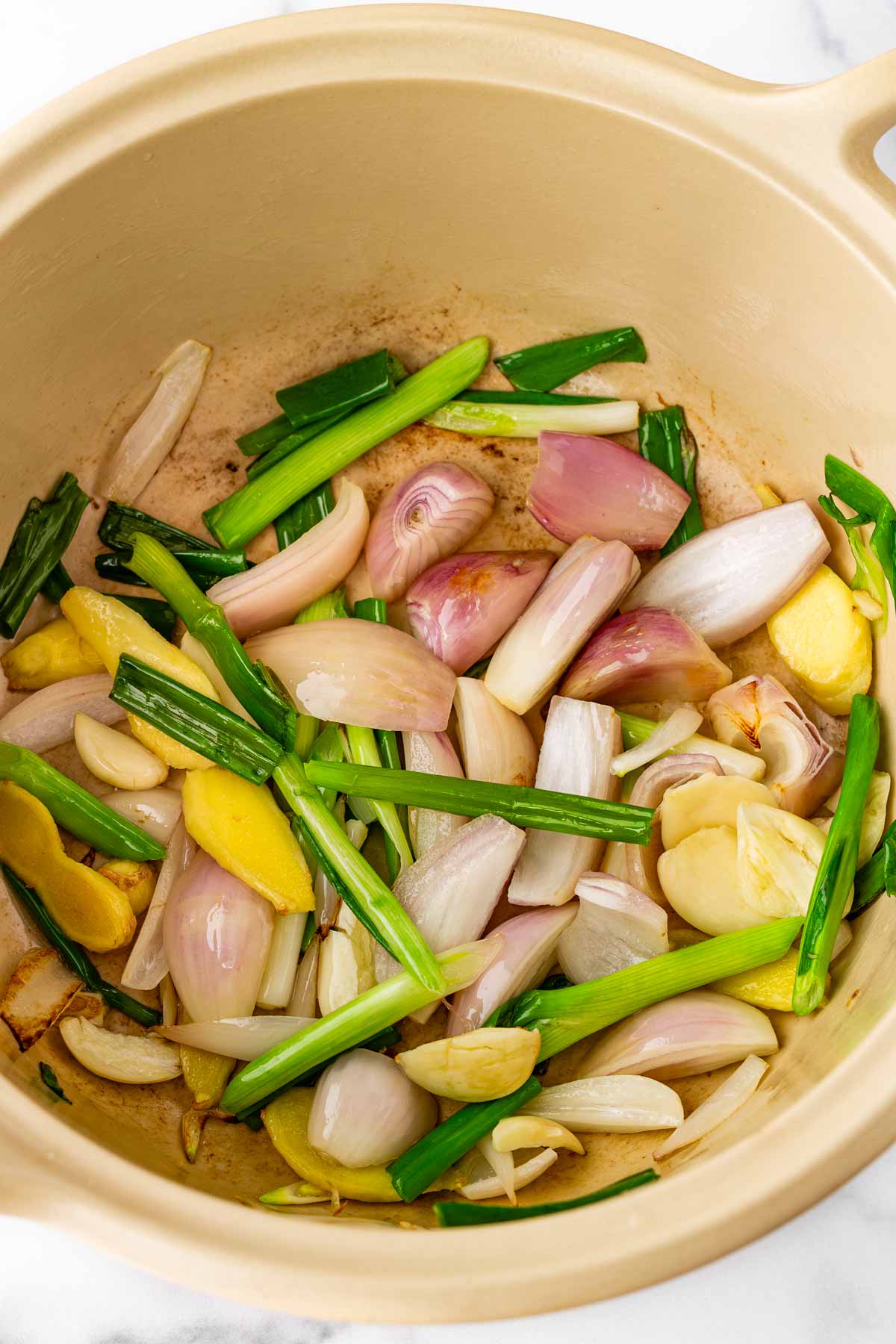
Step 2: Aromatics. In a large deep pot, sauté shallots, ginger, scallions, and garlic with oil until fragrant and slightly charred, about 3 minutes. Then, deglaze with shaoxing wine, scraping off any flavorful bits, until reduced by about half, about 2 minutes.
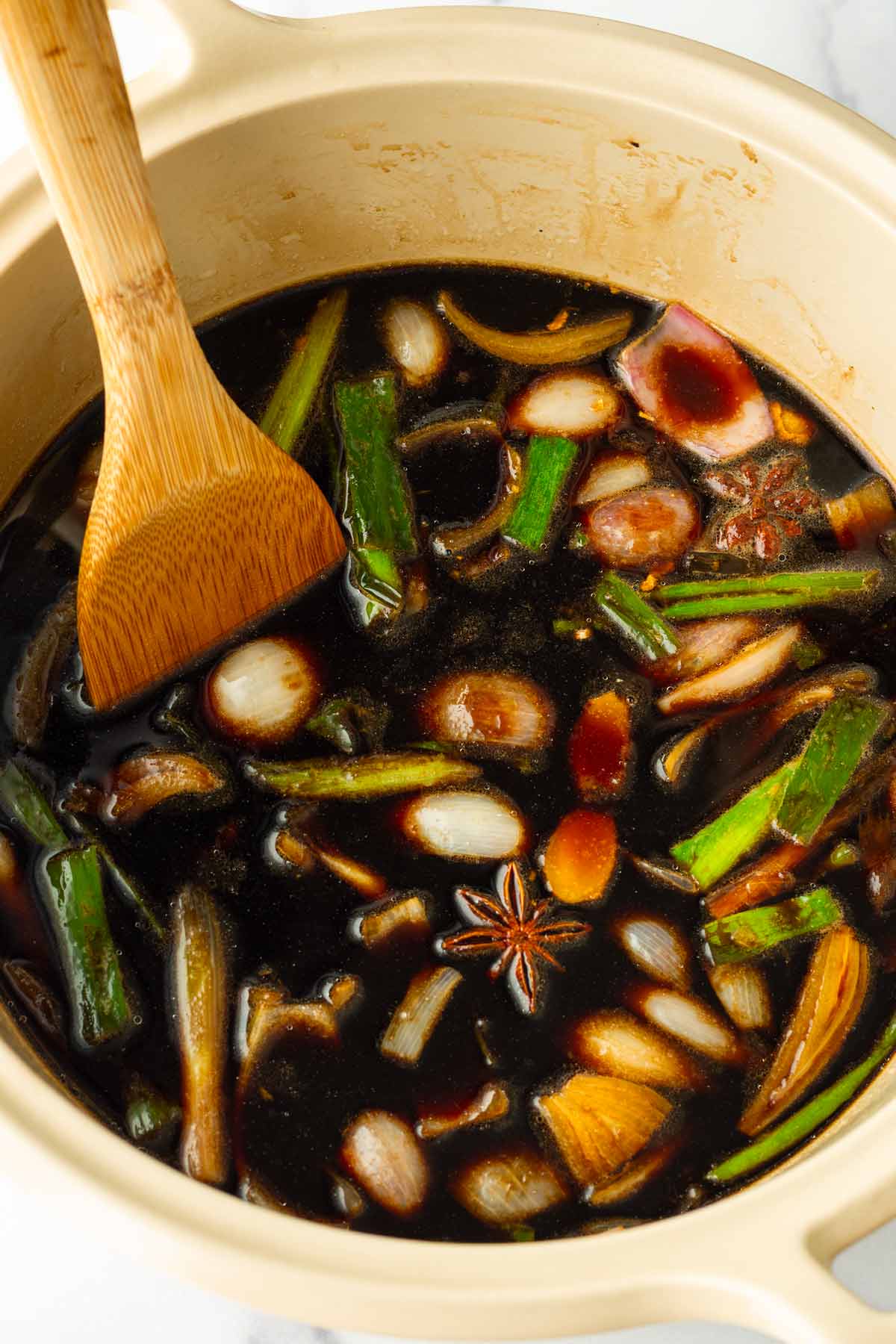
Step 3: Add soy sauce mixture. Add the light soy sauce, dark soy sauce, water, star anise pods, and rock sugar. Stir and bring the mixture to a simmer.
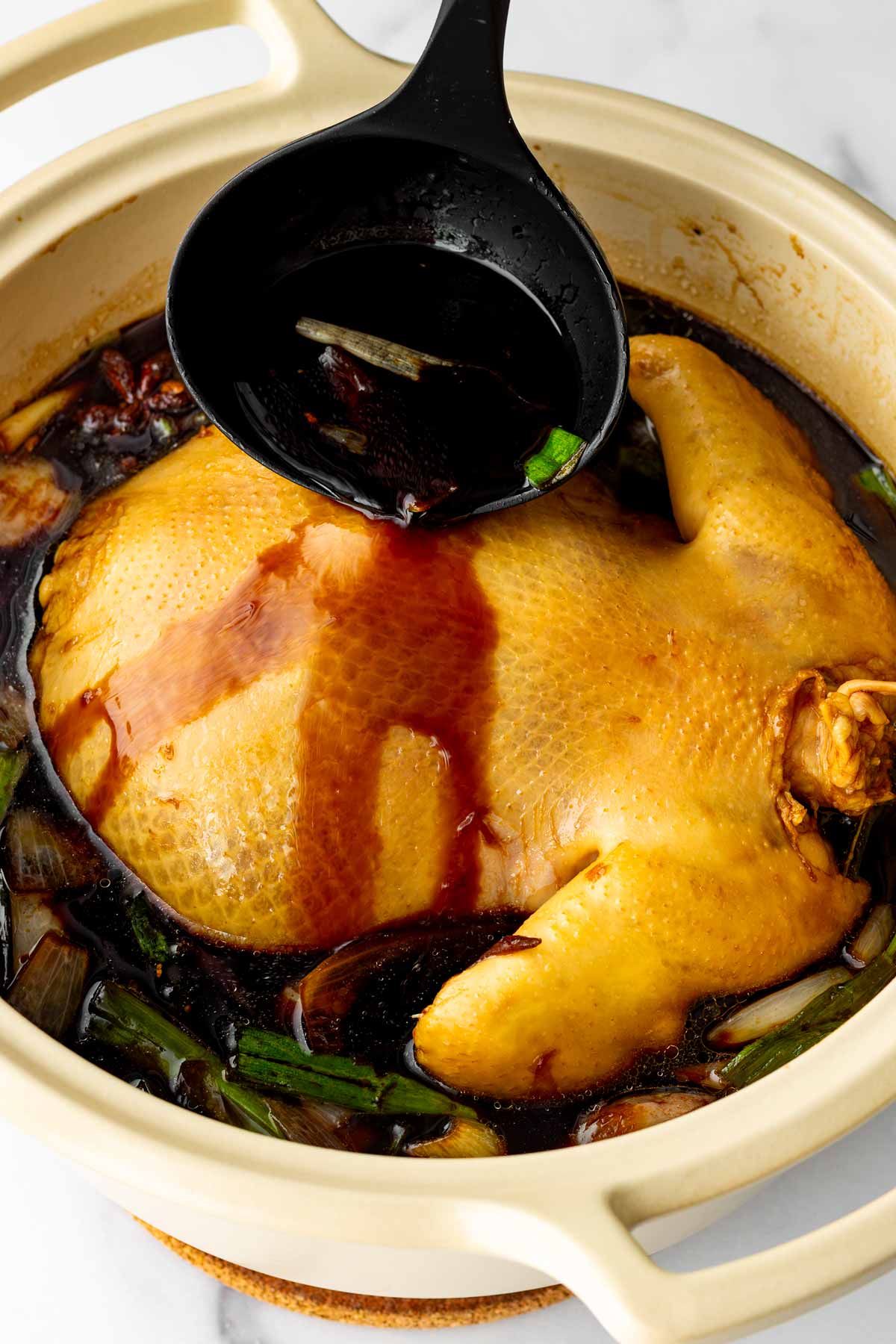
Step 4: Add chicken. Place the chicken in, breast-side down first for 5 minutes. Then flip to continue poaching. It should be mostly submerged; add more water if necessary.
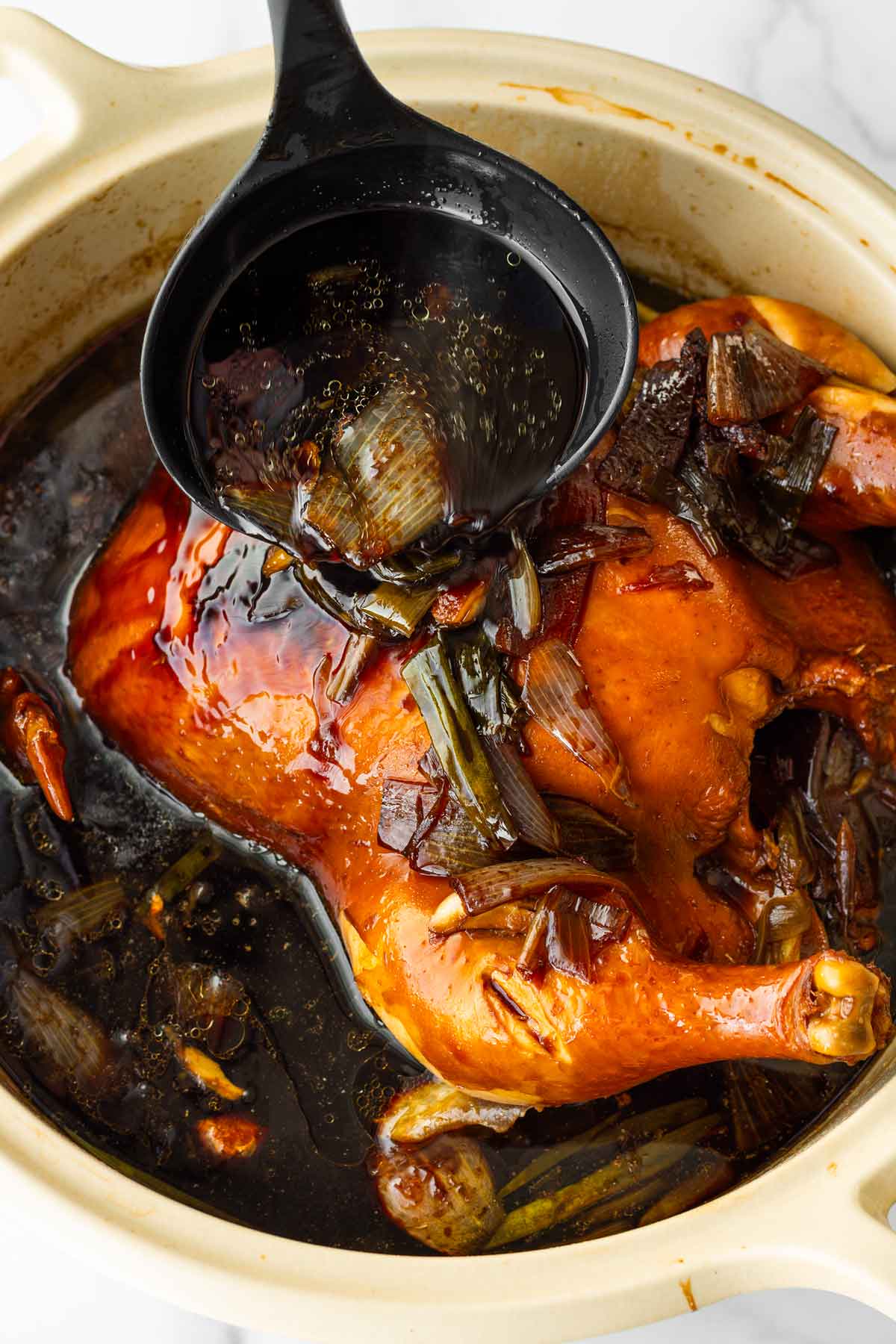
Step 5: Poach chicken. Bring back to a gentle simmer, cover, and cook for about 30 minutes, flipping and basting every 8-10 minutes.
Tip: When turning the chicken, use tongs and grab it from the back to avoid tearing the skin in the front side.
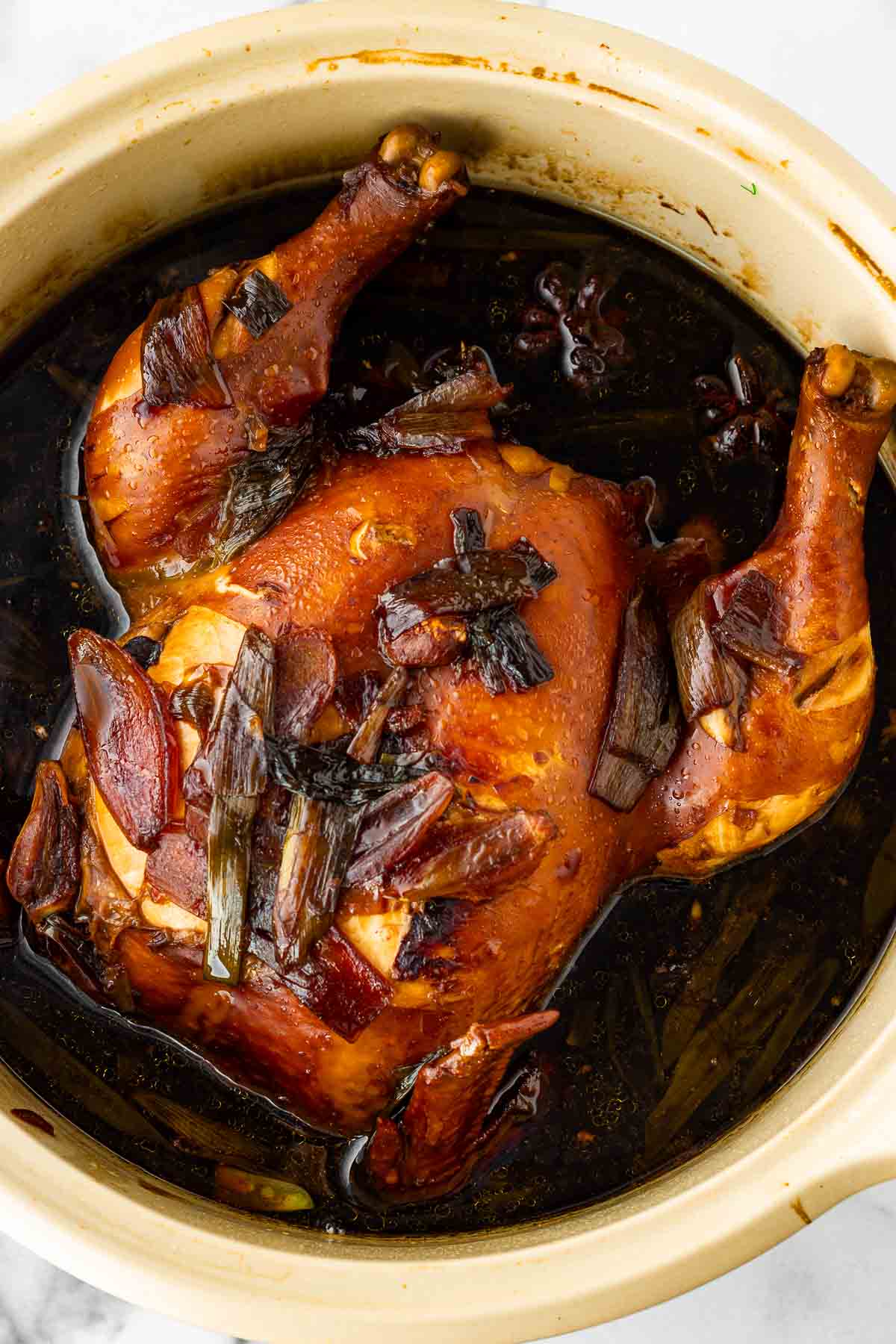
Step 6: Let it sit with heat off. Turn off the heat and leave the chicken inside (breast side up) for 15-20 minutes covered. The residual heat gently finishes cooking it and deepens the flavor.
It’s ready when the internal temperature reaches 165°F.
Step 7: Carve. Transfer chicken to a cutting board and let rest for 10 minutes before slicing so the juices redistribute. A Chinese cleaver works best for chopping through bone, but you can also carve or shred the meat if preferred!
Thickening the sauce: You can thicken the braising liquid with a cornstarch slurry, though traditionally it’s served as is.
How to Get the Signature Color and Tender Texture
- Fully thawed chicken. Frozen poultry won’t poach properly and can cook unevenly.
- Don’t skip blanching the skin. Pour hot boiling water over the raw bird to tighten the skin and remove excess fat so the soy sauce colors the skin evenly.
- Flip and baste regularly. Turn the chicken and ladle the braising liquid over exposed areas every 10 minutes for an even color.
- Fully submerge the chicken. If your pot is not deep enough, you can baste with a ladle every few minutes. It may take longer to cook.
- Gentle heat. Maintain a poaching simmering temperature around 180-190°F (basically a low boil). Anything higher can make the chicken tough.
- Do not sear the chicken beforehand. Doing so will prevent the skin from absorbing the color.
Recipe FAQs
Yes. Chicken thighs or drumsticks work well if you reduce the cooking time. Always use a thermometer to ensure the meat reaches an internal temperature of 165°F.
That’s not necessary. The chicken would be too salty. All you need is to poach it in the soy braise.
Likely boiled too vigorously. Poach gently over a simmer or a low boil.
It’s okay if it tears a little. It can happen when handling the chicken to baste it, or sometimes it can stick to the pot too. Lift the bird by inserting tongs into the cavity rather than grabbing the delicate breast skin, and make sure to turn it every 8-10 minutes.
Use a thermometer. Once it reaches about 160°F during poaching, turn off the heat and let it sit covered in the hot liquid until it gently finishes cooking with the residual heat to 165°F or a little higher.
Make Ahead and Freezing
Make ahead: This soy sauce chicken can be made ahead and refrigerated. I do not recommend marinating it. It’s often served cold or at room temperature in Chinese cuisine, but it can also be reheated gently.
Freezing: Carve the chicken and store portions in airtight containers with some of the braising liquid. Freeze for up to 2 months.
Reheating: Reheat gently in the microwave or in a saucepan with a little of the sauce to keep it moist.
What to Serve with Soy Sauce Chicken
This dish is typically served family-style alongside a few classic Cantonese sides. Try these!
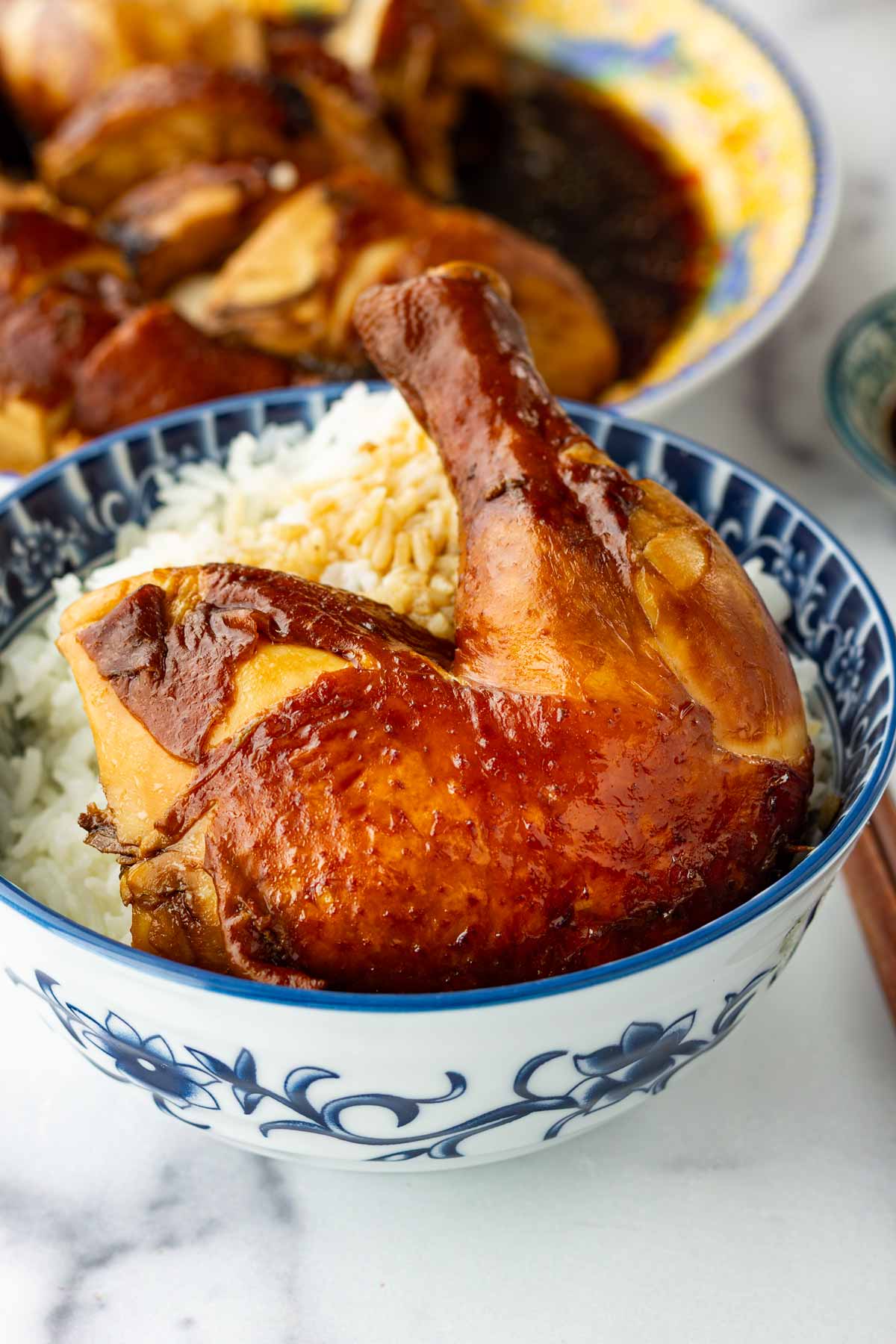
- Rice! The most traditional pairing. Hot coconut Jasmine rice absorbs every drop of sauce! Chinese sausage fried rice and Golden Fried Rice work great too.
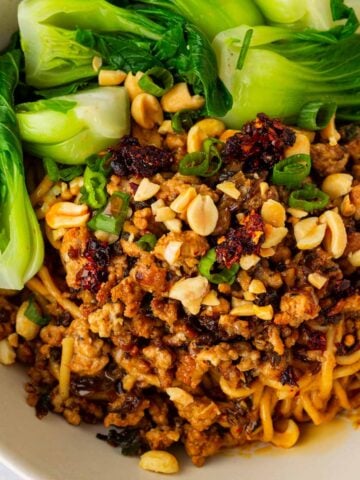
- Noodles: Especially for Lunar New Year, noodles signify long life. Try these slurpy Dan Dan Noodles or Shrimp Lo Mein.
- Greens: Garlic sauted bok choy.
- A ginger scallion sauce with minced garlic, ginger, and scallions flash-cooked with smoking oil provide a bright, sharp contrast to the soy sauce chicken.
More Authentic Chinese Recipes
Chinese soy sauce (“See Yao Gai”) is considered a “siu mei” dish, which is Cantonese-style roasted meat, as is char siu and Chinese ribs.
If you enjoyed this recipe, here are a few more classic dishes to try:
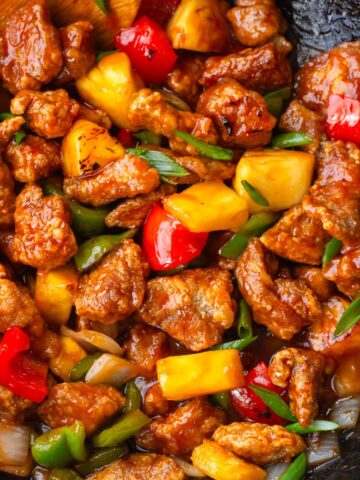
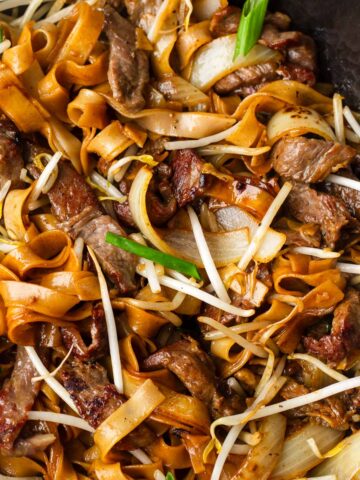
More whole chicken recipes: Slow Cooker Whole Chicken, Dutch Oven Whole Chicken
This is the recipe that takes me right back to my childhood kitchen! I hope you enjoy it as much as we do.
I’d love to hear from you! If you loved my recipe, please consider leaving a 5-star rating and a comment down below. Sign up for my newsletter and follow along on Instagram, Facebook, or Pinterest
Soy Sauce Chicken
Equipment
Ingredients
For the chicken
- 3 pounds whole chicken - small chicken
- 4 to 5 cups water - to blanch the chicken skin
Soy braising liquid
- 2 tablespoons vegetable oil
- 2 medium shallots - peeled and cut into chunks
- 6 slices fresh ginger - peeled
- 5 scallions - cut into chunks, both white and green parts
- 8 cloves fresh garlic - peeled and smashed
- 1 ½ cups light soy sauce
- 3 tablespoons dark soy sauce
- ⅓ cup Shaoxing wine - or dry sherry
- 3 to 4 cups water - plus more as needed for the braising liquid
- 2 pods star anise
- ½ cup rock sugar - or brown sugar
Instructions
- Blanch the chicken skin: Pat dry the chicken thoroughly and place it in a large heat-proof bowl. Boil water (about 4-5 cups). Once boiled and hot, pour it over the chicken. Set aside. Note: Pouring boiling water over chicken, a common Chinese technique, tightens the skin and renders surface fat, which allows the skin to absorb color from the soy sauce better.
- Saute aromatics: In a large 6 or 7-quart pot (large enough to submerge the chicken), heat vegetable oil over medium-high heat. Sauté shallots, ginger, scallions and garlic until fragrant and slightly charred, about 3 minutes.
- Deglaze: Add the shaoxing cooking wine (or dry sherry) and deglaze the browned bits. Simmer until halfway reduced, about 2 minutes.
- Add soy sauce mixture and water: Add the light soy sauce, dark soy sauce, water (3-4 cups), anise star pods, and rock sugar. Mix and bring to a simmer.
- Poach chicken: Carefully add the chicken into the liquid, breast side down first. Make sure it’s almost fully submerged, if not add up to another 1 cup of water. Bring back to a low boil, then flip the chicken breast side up. Cover and simmer for 30 minutes, flipping and basting with a ladle every 8-10 minutes for even color on all sides.
- Let it sit with the heat off: Once the chicken is almost done, turn off the heat and let it sit inside (breast side up) for another 20 minutes, covered. This will gently finish cooking the chicken so it's tender. It’s ready when the center of the chicken reaches 165ºF. At the end, baste it a few more times for additional color.
- Carve and serve: Transfer to a carving board and let it rest for 10 minutes. Then carve and serve. Note – A Chinese cleaver works best for cutting through the bone, but you can also carve or shred the meat if preferred.
- Optional: This dish is traditionally served with a drizzle of the soy braise, which is thin. However, you can thicken it with a cornstarch slurry (about 3 tablespoons diluted in water).
Notes
- Use a small whole chicken (approx. 3 lbs). This ensures even heat distribution and better skin color without the meat becoming overcooked.
- Why blanch the skin. This tightens the skin and removes surface fats, which helps the color to absorb better.
- Maintain a low boil. Avoid a fast aggressive boil, as high heat toughens the protein and tears the skin.
- Use a deep pot, about 6 or 7 quarts, that allows the chicken to be mostly submerged in the liquid for even cooking and color.
- How to prevent the skin from tearing. Turn or baste the bird every 10 minutes so the skin doesn’t stick to the bottom or sides of the pot. Insert the tongs inside the cavity on the back to avoid tearing the front breast skin.
- When to turn off the heat? After about 30 minutes or when the internal temp reaches about 160°F. Cover the pot and allow the chicken to rest in the residual heat for another 15-20 minutes until it reaches 165°F or a little higher.
- Sauce consistency: The final sauce is traditionally thin and drizzled over the chicken, but feel free to add a cornstarch slurry to chicken it (about 3 tablespoons).
- Make ahead: This dish can be made ahead 1 day ahead since it is sometimes traditionally served at room temperature or chilled. Do not marinate the chicken raw; it must be poached directly.
- Freezing: Freeze for up to 2 months. Thaw in the fridge before reheating.
- Bone-in chicken thighs or drumsticks can be used for a shorter cooking time (approximately 20–25 minutes).
- Brown sugar is the preferred substitute for rock sugar.
- Red or white onions can be used instead of shallots.
- Shaoxing wine: Substitute with dry sherry.



Leave a Reply