

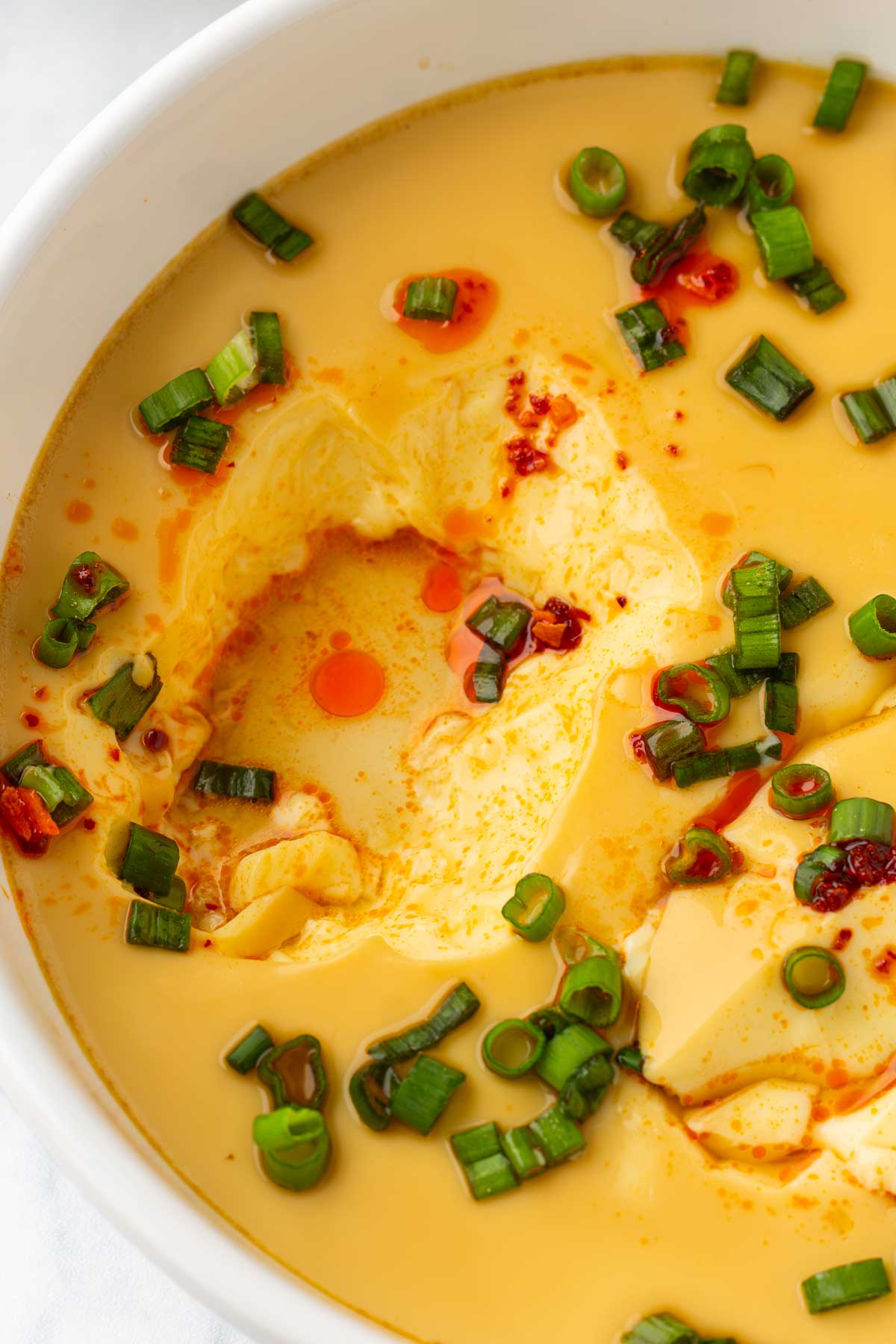
Chinese Steamed Eggs are a classic comfort dish in Cantonese-style home cooking, gently steamed until silky and smooth, with the perfect jiggle.
This recipe takes out all the guesswork so you get perfectly smooth and silky steamed eggs at home every time. It’s all about ratios and a very simple technique!
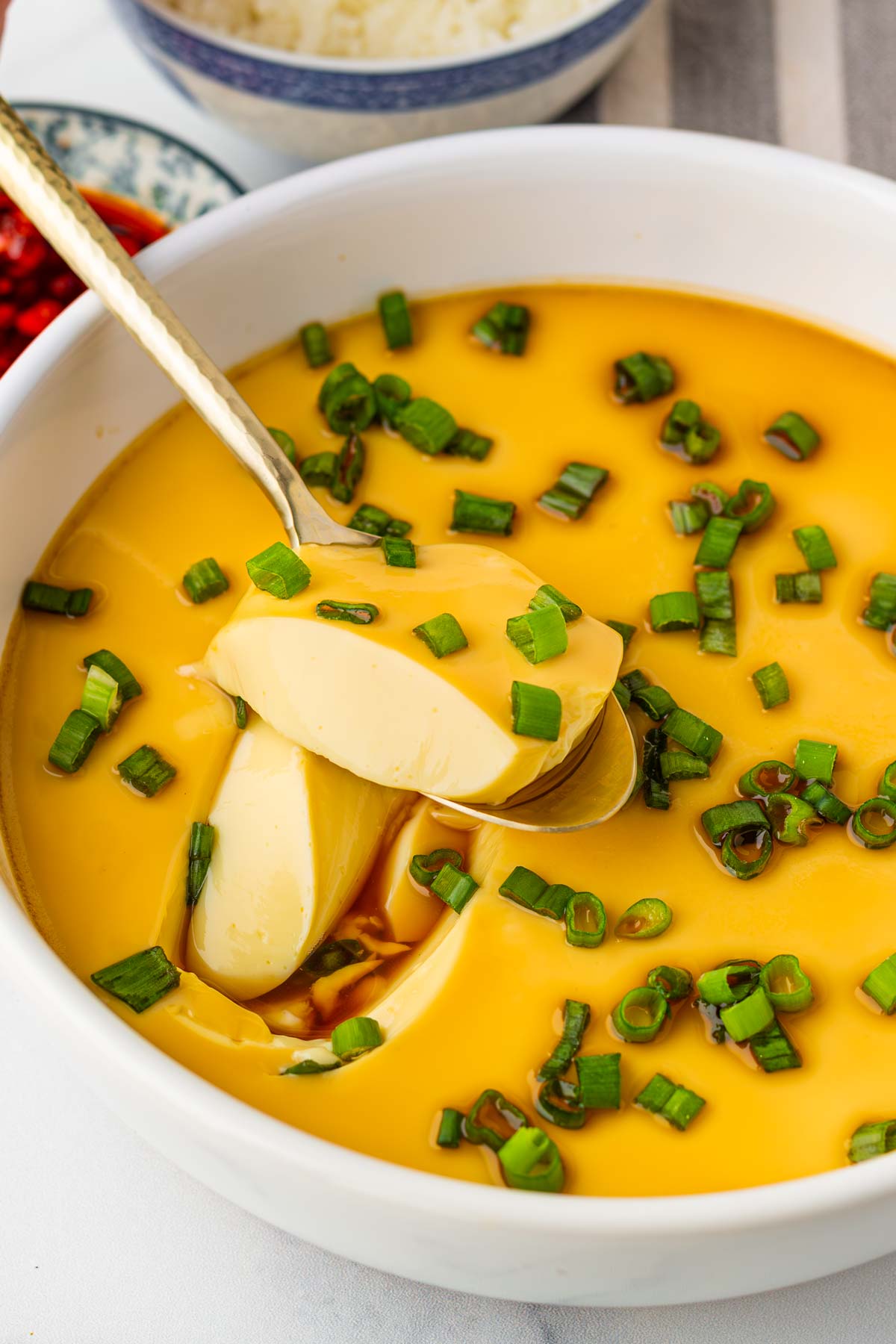
Growing up in a Cantonese family, if there are two dishes that feel just like home, it would be beef chow fun and these smooth and silky Chinese steamed eggs. At home, we call it “zing seoi daan” in Cantonese, which translates to “steamed-water-egg.”
Making Chinese steamed eggs is all about getting the egg to liquid ratios right and using the right steamer set-up. It’s actually really simple, and 25-ish minutes is all it takes!
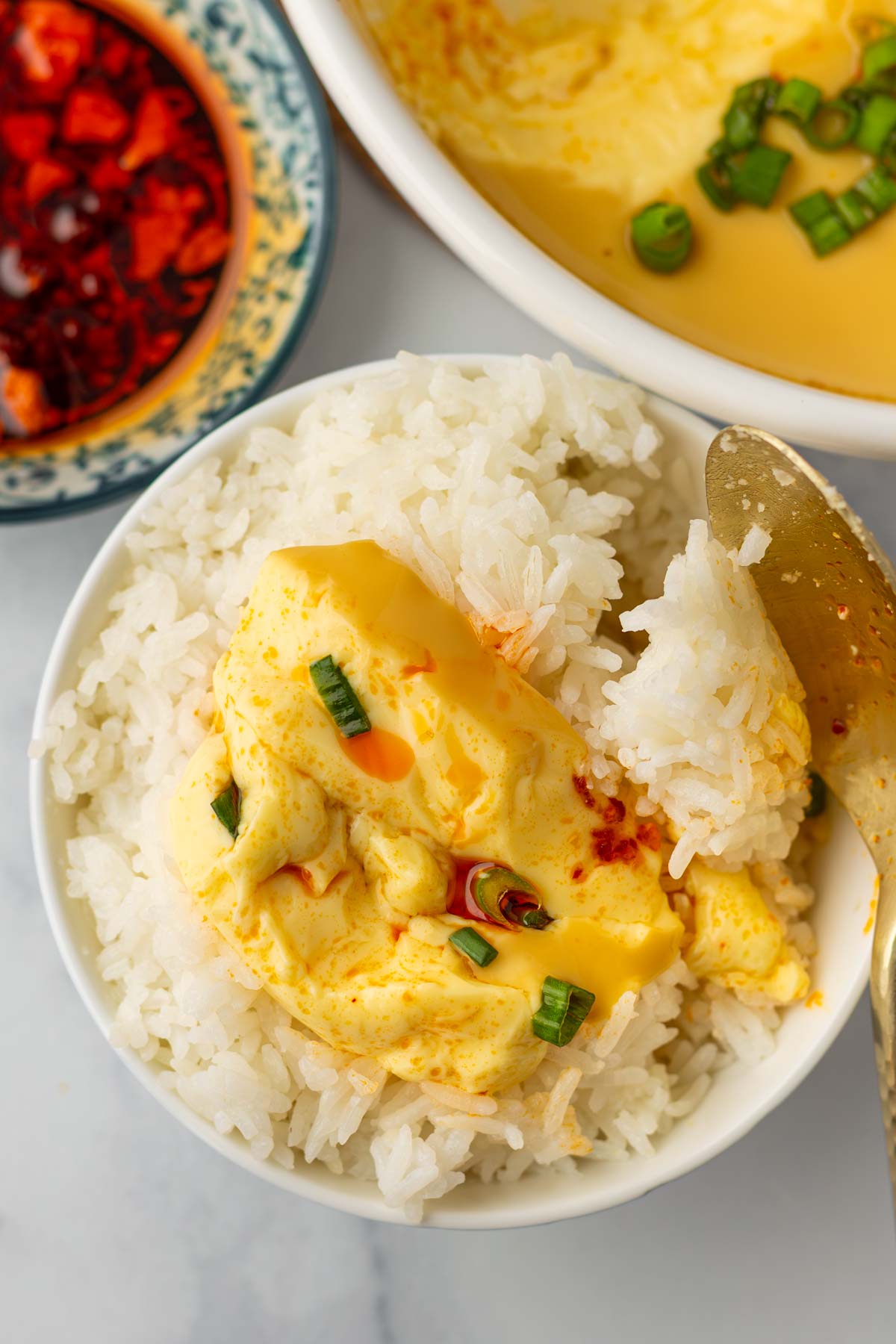
Especially when served over a bowl of steaming white rice, this humble side dish is pure home comfort food. Serve touch of light soy sauce, sesame oil, and scallions!
Jump to:
Ideal Egg to Water Ratio
Getting perfect Chinese steamed eggs is all about the egg-to-water (or broth) ratio. The ratio is 2:1 liquid to eggs by liquid VOLUME. So, twice as much liquid as the volume of eggs.
Here’s exactly how to measure the volume:
- Crack the eggs into a glass measuring cup.
- Check the volume of the eggs. 3 large eggs is usually about 2/3 cup.
- Measure twice that amount of liquid. For example, for 3 eggs, you need two times 2/3 cup of broth, which equals 1 ⅓ cups of broth.
This method ensures your steamed eggs turn out smooth, silky, and perfectly set every time. Not watery and not too firm. Some people use the cracked eggshell halves as a quick way to measure the liquid volume. Detailed instructions below!
Ingredient Notes
This simple Chinese steamed egg recipe contains just 3 main ingredients, plus topping suggestions such as soy sauce.
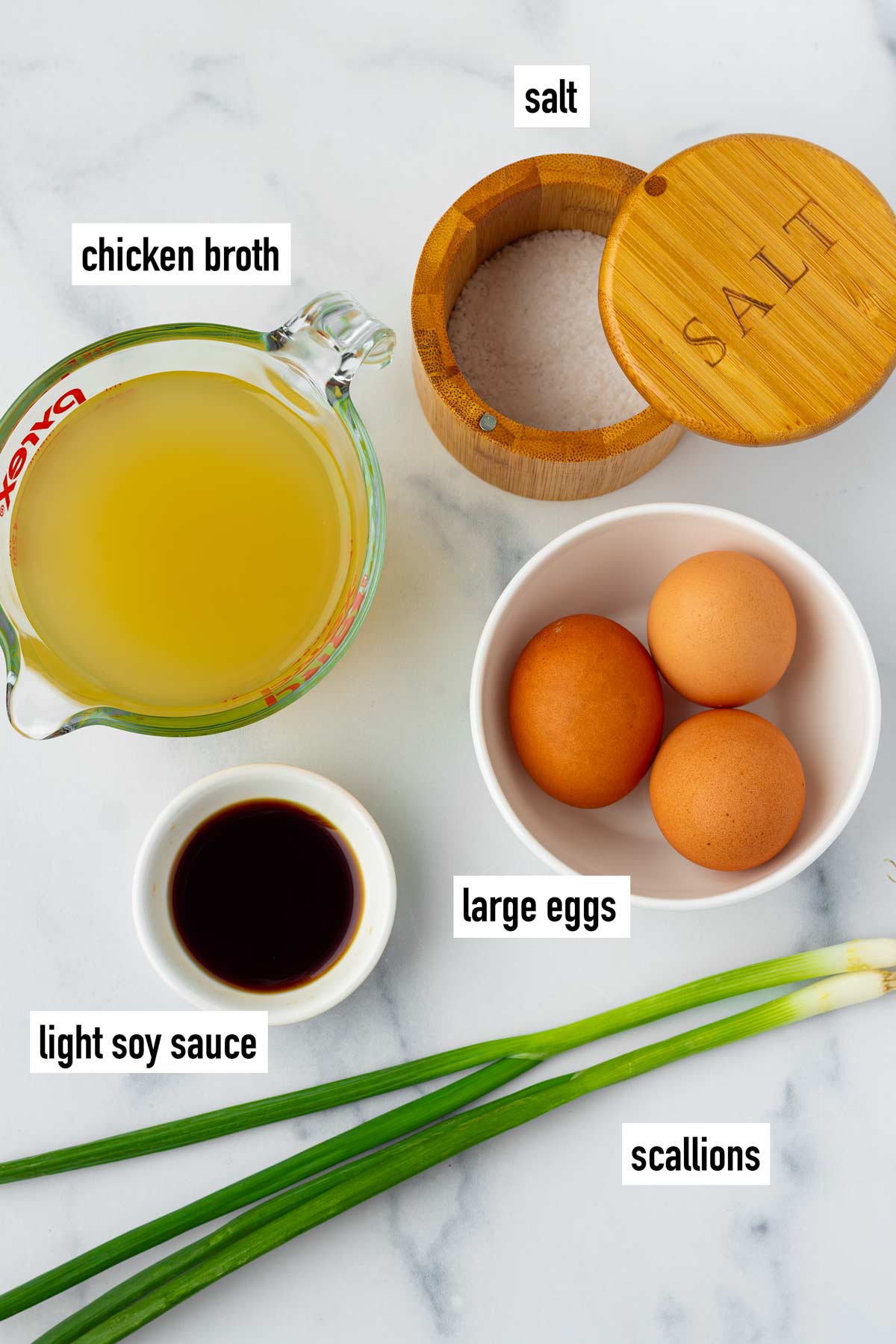
- Large eggs: Usually for 3 or 4 servings, you need about 3 large eggs.
- Chicken broth: I like to use chicken broth because it adds flavor. The broth or water needs to be warm, about 115ºF is ideal to temper the eggs. Use a thermometer if preferred.
- Salt, just a pinch.
- Toppings: Light soy sauce, extra chicken broth, sesame oil, and scallions (green parts only).
As always, ingredient quantities can be found in the recipe card down below.
How to Set Up The Steamer
Here’s my complete set-up to steam eggs. You need three things:
- Steamer: This is a large 12-inch deep pan with deep steamer basket and a lid
- 8-inch ceramic heat-proof bowl. The bowl I use is about 2 inches in depth.
- A 9- or 10-inch ceramic plate (heat proof) to cover the eggs in the bowl. This prevents water droplets from condensation in the pan from failing onto the eggs. This way you can get the perfect smooth surface on the steamed eggs.
Other options include:
- A large bamboo steamer set on a large wok and a lid
- A stovetop steamer
How To Make Chinese Steamed Eggs
Once you have your ingredients and a steamer, making Chinese steamed eggs is really easy. Let’s make it!
Step 1 | Set up your steamer
Add about 1 inch of water to the pan, insert the steamer basket, and cover with a tight-fitting lid. Before heating, make sure both your ceramic bowl and its cover plate fit inside the basket while still allowing the steamer lid to seal securely. Once everything fits, bring the water to a simmer.
Step 2 | Measure and strain
In a glass measuring cup, crack and whisk the eggs until evenly combined. Note their total volume (typically for 3 eggs, it’s ⅔ cup).
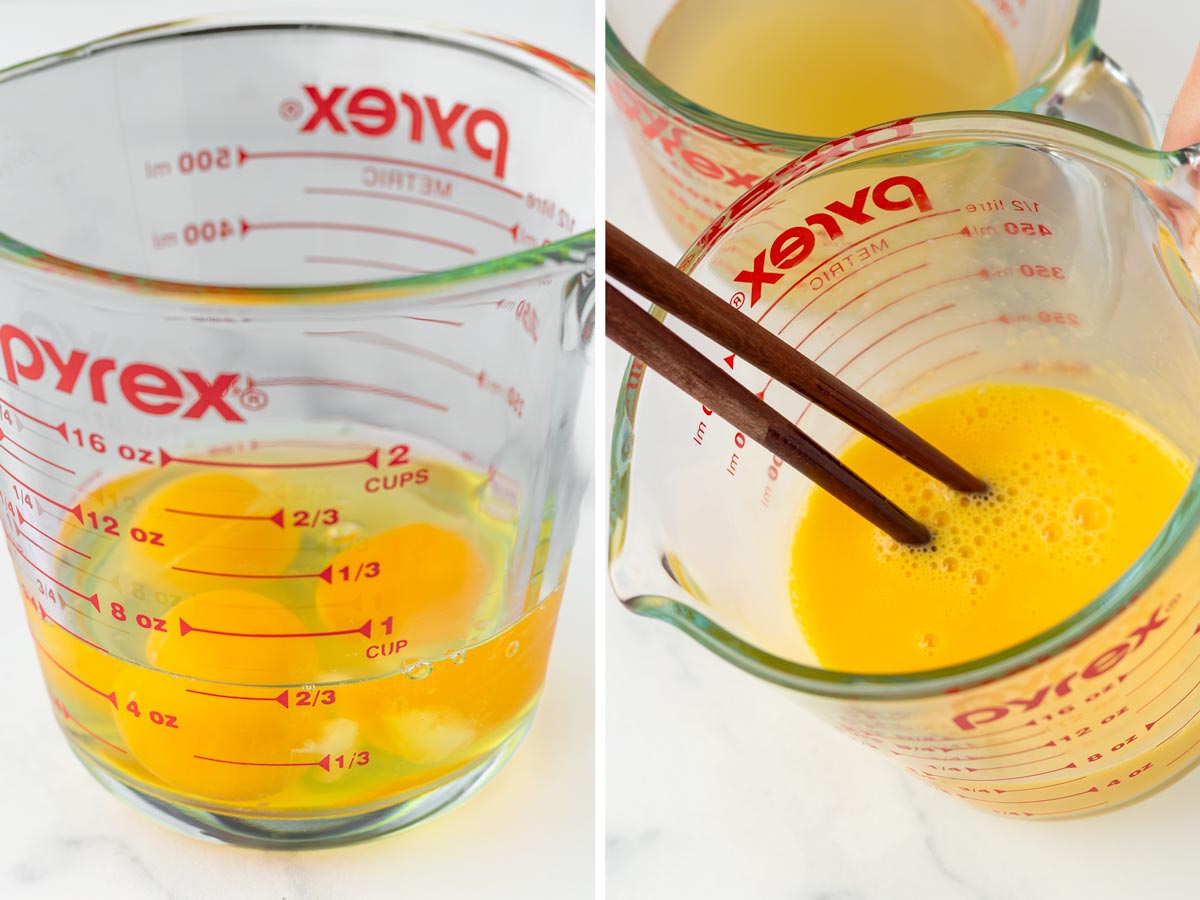
In a separate glass measuring cup, measure twice that volume in broth (in this case, two times ⅔ cup equals 1⅓ cups), and microwave it until warm, approximately 115°F. Whisk the warm broth and a pinch of salt into the beaten eggs until fully incorporated.
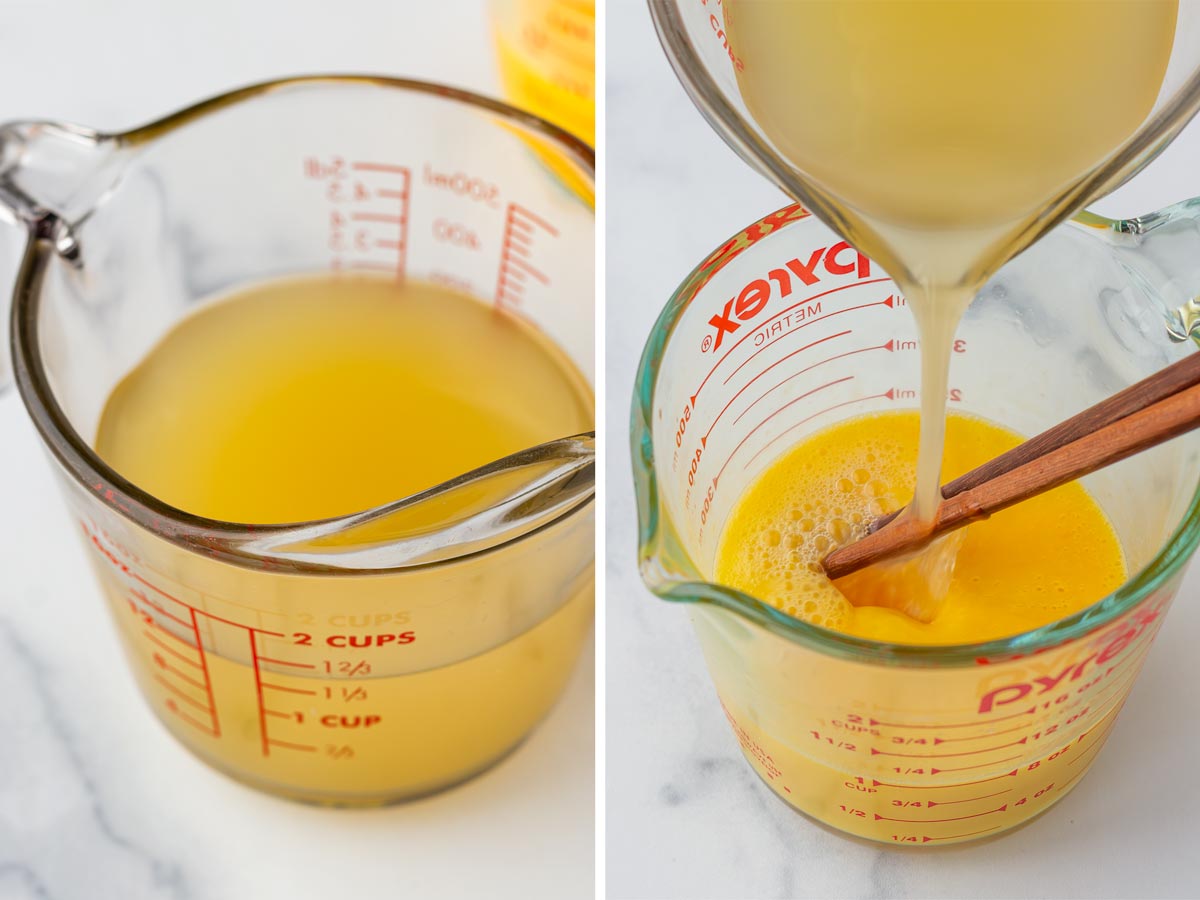
Then strain through a fine-mesh strainer into the heat-proof ceramic bowl to remove excess bubbles and ensure a silky-smooth texture.
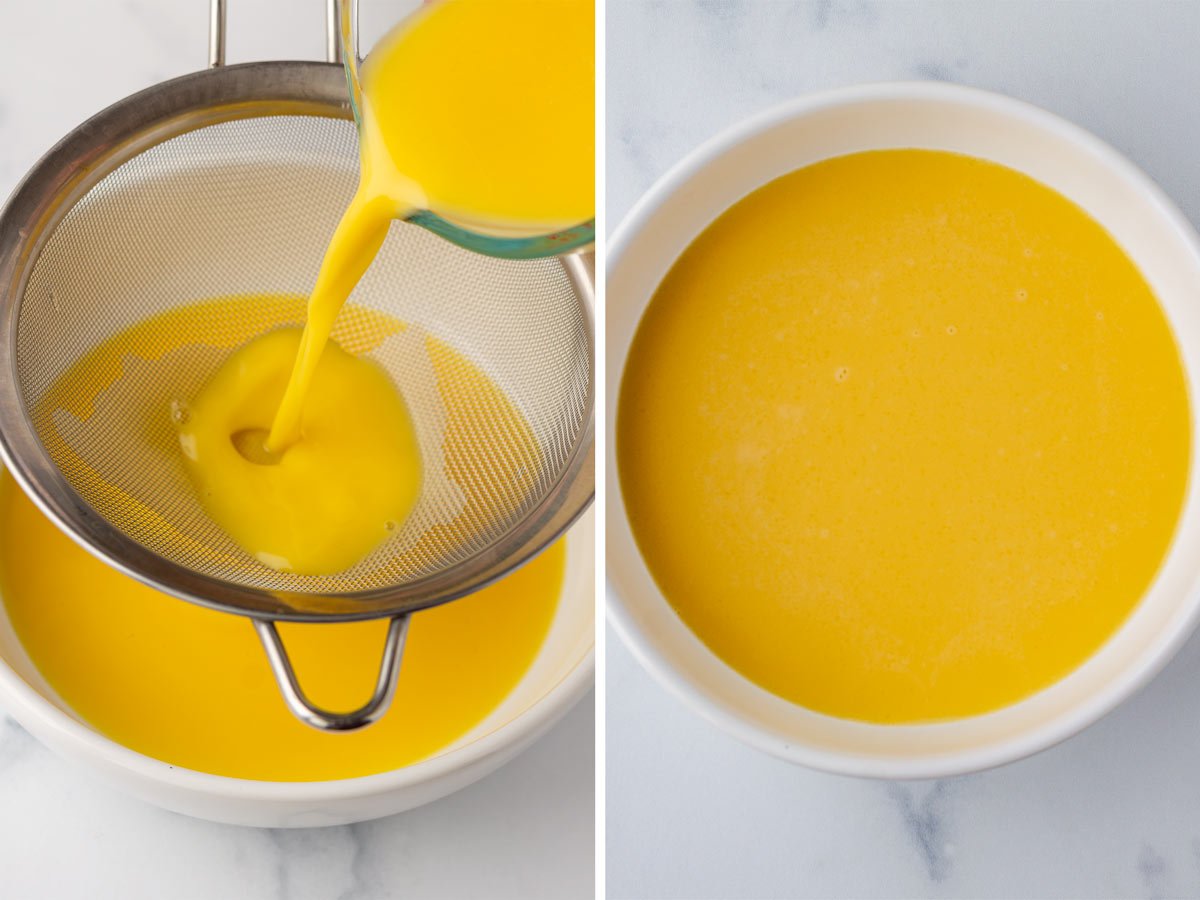
Step 3 | Steam the eggs
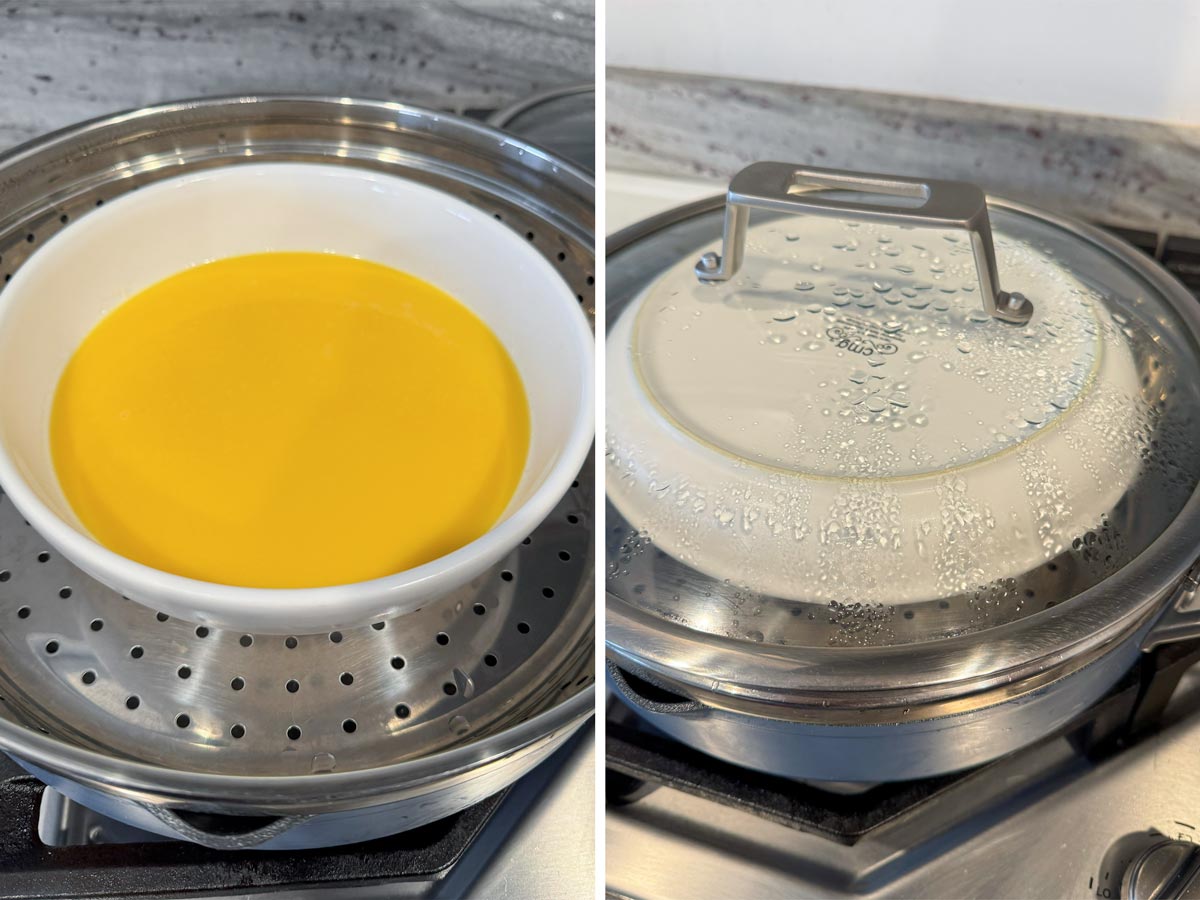
Place the bowl into the steamer basket and cover it with a heat-proof ceramic plate. This water droplets on the surface of the eggs. Cover with the lid tightly and steam somewhere between medium-low to medium heat for 12 minutes, maintaining a steady low boil throughout the steaming process.
Once the time is up, turn off the heat but leave the steamer covered to rest for 2-3 minutes. The eggs should be perfectly set yet still jiggly and smooth.
Step 4 | Garnish and serve
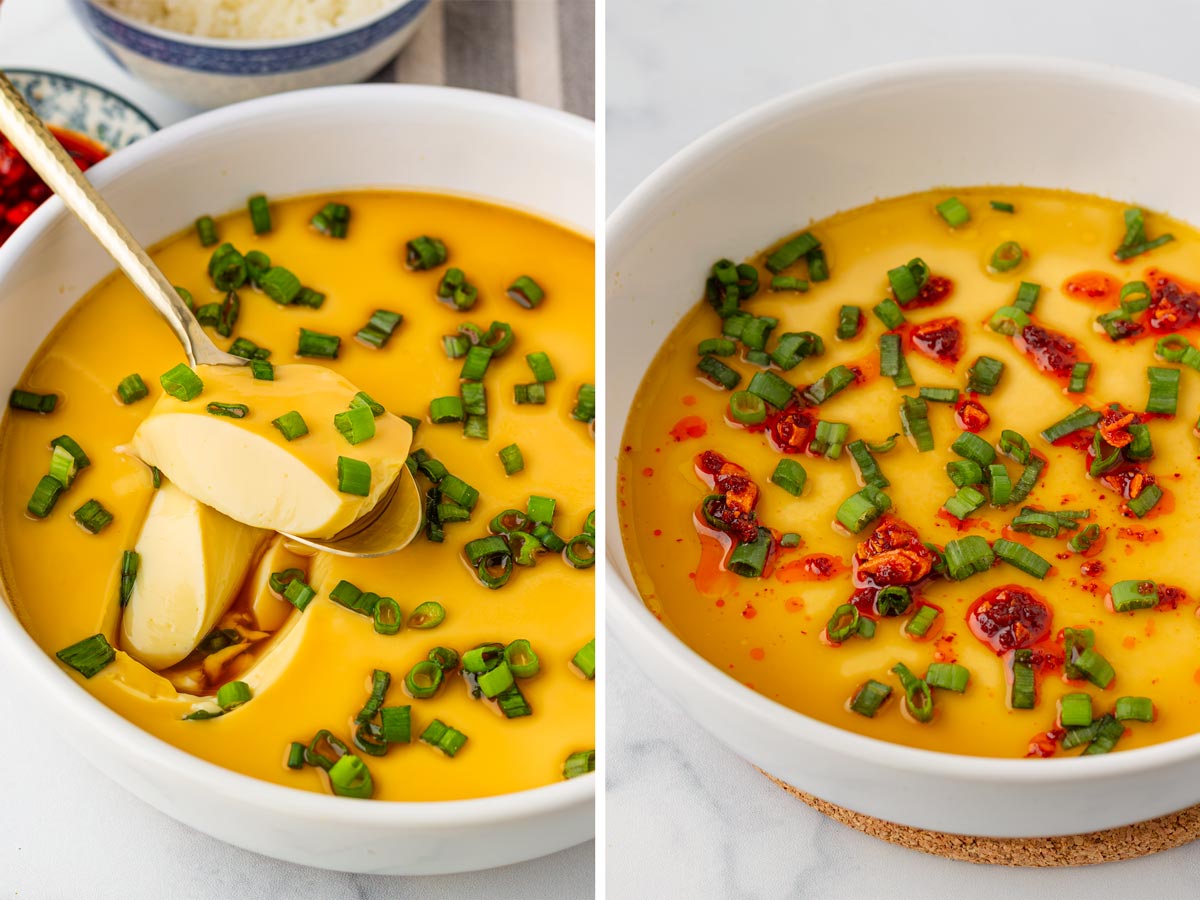
In a small bowl, whisk together chicken broth, soy sauce, and an optional dash of sesame oil to taste. Drizzle this savory mixture over the steamed eggs and finish with a garnish of sliced scallions. Or try it with chili oil crisp!
How Long To Steam Eggs
It depends on how many eggs you use, but generally for 3 eggs, give it 12-13 minutes total over medium-low to medium heat, as long as it’s a steady low boil.
In my experience, this is the best approach: steam for 12 minutes, then turn off the heat and, without opening the lid, let it rest in the steamer for another 2-3 minutes. This allows the eggs to finish cooking gently through residual heat.
Tips for Success
- Use a glass measuring cup to measure volume. You need twice as much water/broth than the volume of eggs.
- The broth or water needs to be warm, about 115ºF is ideal to temper the eggs. Use a thermometer if preferred.
- Use a mesh strainer. To ensure the surface of the steamed eggs is smooth, pour the egg mixture through a fine mesh strainer into the bowl, to remove any excess bubbles.
- Make sure everything fits into the steamer well. The lid needs to fit tightly for proper steaming. To prevent the steam from escaping, don’t open the lid until it’s ready.
- Constant and steady low boil. After the water is boiling, make sure it’s on a steady rolling low boil.
Recipe FAQs
This can happen if the egg mixture was not strained through a fine mesh strainer. It can also happen if you don’t cover the eggs in the bowl when steaming, as the water condensation from the lid can drip down into the eggs.
The center should jiggle slightly, while edges should be mostly set. It shouldn’t look liquid-y or too firm.
Make sure you use the right ratio, one part egg to two parts liquid. Also, steam over medium-low to medium heat over a steady rolling simmer for consistency. Pro tip: Ensure the broth is lukewarm (around 115°F) for even steaming.
It’s probably because the eggs haven’t set yet, so steam longer, or because too much liquid was used.
You can use either. If using water only, add an extra pinch of salt or chicken powder bouillon.
How To Serve
Topping: The simplest and most traditional way of serving Chinese steamed eggs is with a drizzle of soy sauce and scallion garnish on top.
Filling: You can also add filling into the custard, such as shrimp, clams and minced beef, before steaming.
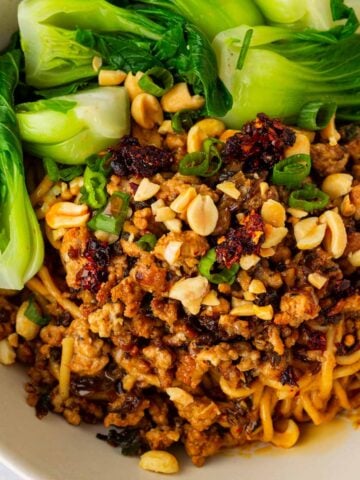
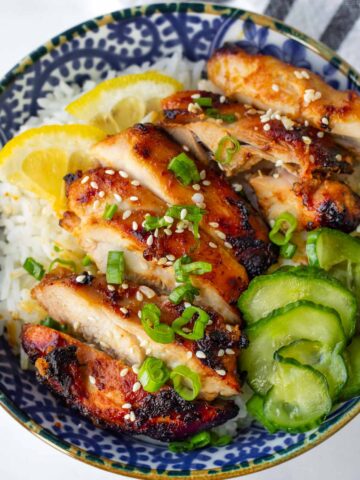
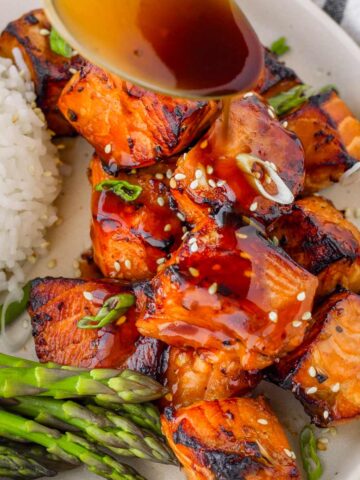
Chinese steamed eggs are more like a side dish, and it’s especially delicious served over a hot bowl of rice (try it with my coconut rice!). I love pairing them with these main dishes:
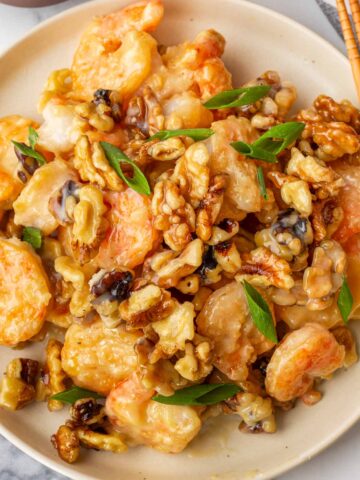
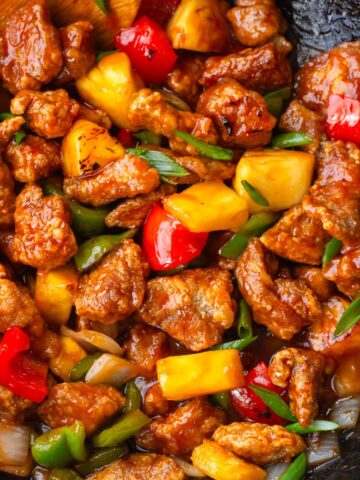
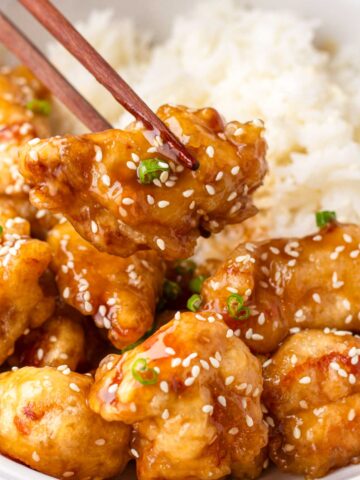
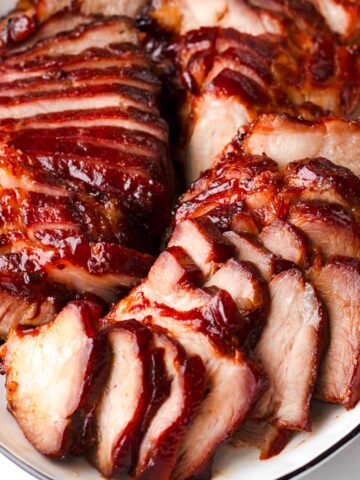
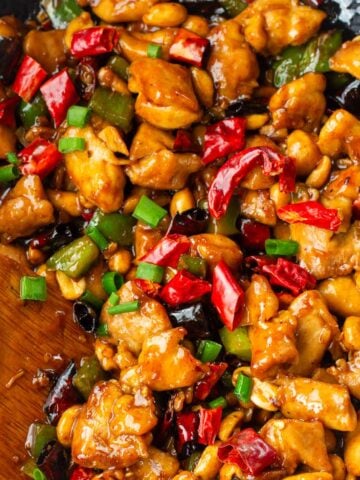
Other great options: Chinese BBQ Ribs, Chinese Chicken Corn Soup, Kung Pao Chicken, Beef and Onion Stir Fry.
I’d love to hear from you! If you loved my recipe, please consider leaving a 5-star rating and a comment down below. Sign up for my newsletter and follow along on Instagram, Facebook, or Pinterest

Chinese Steamed Eggs
Equipment
- 8-inch ceramic bowl heat-proof
- 9- or 10-inch heat proof ceramic plate to cover the bowl
Ingredients
- 3 large eggs - equiv to ⅔ cup in volume approx
- 1 ⅓ cups chicken broth - or double the volume of eggs, see instructions for measuring tips
- A pinch of salt
Topping, for serving:
- 2 teaspoons chicken broth
- 1 teaspoon light soy sauce
- 1 scallion - thinly sliced – green part only
- Sesame oil - to taste
Instructions
- Prepare the steamer pan: Add about 1 inch of water to the bottom of the steamer pan, insert the steamer basket insert, and cover. Bring to a steady simmer over medium-low to medium heat.
- Measure egg and broth volumes: Crack the eggs into a glass measuring cup and note their volume. Then, measure out exactly twice that volume in chicken broth. Since 3 eggs usually fill up 2/3 of a cup, you will need 1 ⅓ cups of broth total (two times 2/3 = 1 ⅓ cups).
- Warm up the broth and combine: Microwave the broth until warm to approximately 115°F. This helps to temper the eggs for even cooking. Beat the eggs until well and evenly combined, then whisk in the warm broth. Season with a pinch of salt.
- Strain the egg mixture: Using a fine-mesh strainer, strain the egg mixture into a medium shallow 8-inch ceramic bowl. Gently remove any bubbles on the surface by dabbing it with paper towel.
- Assemble in the steamer: Place the bowl with the eggs in the steamer basket. Then, carefully cover the bowl itself with a heat-proof ceramic plate. This prevents any water droplets from falling onto the surface.
- Cover and steam: Cover with the lid tightly and steam over medium-low to medium heat for 12 minutes. Tip: Make sure the water is on a constant and steady low boil for even heat distribution.
- Let it rest: After the 12-minute mark, turn off the heat (do not open the lid), and let it rest inside for 2-3 minutes. Then, uncover. The edges should be mostly set, but the center should be still a little jiggly, silky, and smooth. If it looks watery or not set yet, continue steaming.
- Topping and serving: In a bowl, mix 2 teaspoons of chicken broth with 1 teaspoon light soy sauce, and a touch of sesame oil. Top the steamed eggs with it, then garnish with sliced scallions. Enjoy!
Notes
- Equipment notes: Make sure that after you put the bowl and plate into the steamer, that the lid can close tightly in order to trap all the steam inside.
- Measure by liquid volume: Measure the cracked eggs in a measuring cup first to determine the exact broth amount needed. The old school way is to use the egg shells to measure the liquid, either way works, but a measuring cup is more accurate.
- Use warm broth (approx 115°F). This tempers the eggs for a faster, more uniform set.
- Strain! Always pour the mixture through a fine-mesh strainer into the bowl to eliminate air bubbles.
- Why cover the eggs with a plate: Prevents the water from condensation collected on the lid from falling on the surface. Some people cover with plastic wrap, but I’m always nervous about plastic and heat.
- Steady heat, rolling simmer: Maintain a steady rolling simmer (between medium-low to medium). Avoid a strong boil, which can lead to a rubbery texture, or not enough heat to create steam.
- Let it rest. For this recipe, steam for 12 minutes, turn off the heat and don’t open the lid, and let it rest undisturbed for 2-3 minutes. Residual steam finishes cooking the center gently.
- How to tell when it’s ready. The center should jiggle slightly, while edges should be mostly set. It shouldn’t look liquid-y or too firm.
- Chicken broth: Water or vegetable broth. If using water, add an extra pinch of salt or chicken bouillon powder.
- Toppings: Aside from a drizzle of soy sauce, try chili oil or chili crisp.
- Add-ins: Shrimp, clams, or minced beef are popular. Add them (uncooked) into the bowl with the egg mixture before steaming.


Leave a Reply